Monday, April 29, 2013

1000 Miles


Almost three years ago I began logging my runs.  This month I passed 1000 miles.


I never set out with a goal to run a certain number of miles, so 1000 kind of snuck up on me.  Having run my whole life, I think I began logging my runs primarily to start keeping myself committed to run regularly, and maybe to see how much I was actually running.

Here’s how it breaks down:

Jun-Dec 2010:  32 runs, average distance 4.8 miles, annual total 155.89 miles.


Jan-Dec 2011:  64 runs, average distance 4.6 miles, annual total 295.26 miles.


Based on the data I captured for seven months in 2010, I probably ran just short of 300 miles for the whole year, just as I did in 2011.  That tracks with my own perception of how I was running.  I was fairly consistent, with most of my running happening in the best weather during spring and fall.  This is obvious when looking at the graph for 2011.  In June of 2011, I moved from southern Germany to Las Vegas, Nevada: a dramatic climate change, but my running picked up again in the fall.

Jan-Dec 2012:  77 runs, average distance 4.7 miles, annual total 364.83 miles


Climate change aside, something odd happened in 2012:  my mileage was low in the winter, and stayed low through the spring and didn’t pick up until fall.  I’m not really sure why, since the weather is fine for running year round in Las Vegas, except for during the day in the summer.  It seemed I just skipped my usual volume of running in spring and I’m not sure why.  Back to why I started tracking my runs:  based on my own perception, I wouldn’t have noticed this.  The records gave me the ability to look back.  Regardless, what brought caused in increase in miles toward the end of the year was my decision to run a half marathon.  I grabbed a training plan from Runner’s World and started to work toward the goal of entering and finishing the Rock ‘n‘ Roll Las Vegas Half Marathon.  I ran that race in December 2012, ended the year strong and moved into 2013 pleased with what I had accomplished in the form of the half marathon.

Jan-Apr 2013:  42 runs, average distance 5.4 miles, annual total 228.77 miles.


I set a few goals for 2013:  to run at least two half marathons and to enter and run my first full marathon.  Little did I know that I’d almost immediately knock out one of the half marathons.  Late in December I received an email from Competitor prompting me to enter the Rock ‘n’ Roll Arizona event, pointing out that if I ran these two desert races back-to-back, I would pick up an additional finisher’s medal called the “Double Down”.  I entered and rolled right back into the last 30 days of training for a half marathon.  The new year was starting as strong as the previous year ended.

Now, four months into the year, I’m keeping my miles up better than in years prior.  As April comes to a close, I’ve logged just over 55 miles, pausing only for eye surgery at the very end of the month.  I’ll pick right back up again the second week in May, consistent with what the doctors advice.  I have my sights set on running the Rock ‘n’ Roll Las Vegas marathon in November this year, and somewhere between now and that race I’ll find at least one more half marathon to run to achieve my goals for the year.  Also, if the last two thirds of this year mirror the first third, I'm on pace to log just short of 1000 miles in 2013 alone.  We'll see how that works out, but I'd like to think I can do it with just a few extra miles here and there.

So what does it all mean?  There’s certainly satisfaction in seeing I’ve run 1000 miles.  I’m looking ahead, I'll cross the 2000 mile mark sometime around the beginning of 2014.  If the marathon this fall goes as well as I hope, I want to run at least one marathon in 2014 and attempt a 50K later in the year.  I’m convinced seeing my running progress charted out has helped me run like I should, rather than just thinking I’m running like I should.  I can see when I’m slacking off.  Even so, the charts alone don’t motivate me completely.  While I have a goal of running to maintain fitness (physical, mental and emotional), without specific goals to reach (races, time improvements), while still good it will quickly become less purposeful.  I think this is what happened during the first half of 2012.  Entering and running races ensured I have something specific I’m shooting rather than just the general/overall purpose of fitness.

Then there’s a long-term goal--perhaps THE long-term goal:  to run for the rest of my life and to be an example for my son.  I want us to enjoy each other’s company for a long time to come, and hopefully serve as a good example for him.  And you already know why.  Because...

It’s great to be a dad!
Saturday, April 13, 2013

Running Etiquette (Part 2)


My last post covered ten of my running etiquette “rules” and as promised, here are the rest.  I hope you find them useful!


Here we go, picking up at number 11:
  1. (#11)  The road or trail doesn’t care about you.  Potholes, rocks, lose gravel and the weather are indifferent about what you’re doing.  Wildlife doesn’t respect you or your good intentions either.  Don’t let the routine, the ordinary, or your experience lull you into a false sense of security.  Be prepared for the things that don’t usually bite you, literally and figuratively.  Hope for the best but have a reasonable plan for the worst.
  2. (#12)  Have a plan.  In the spirit of the previous rule, let folks know your plan and carry some form of identification.  Whenever possible I let my wife know where I intend to run and how far/long I expect to go. I’m also a huge fan of Road ID.  Let’s face it, we’ve all set out to run a certain route and/or distance, along the way you change the plan for any number of reasons and suddenly you’re not where you said you’d be.  Then you find yourself needing help.  Back to Road ID--pure figurative gold and very affordable.  No matter what, if someone finds you, they have the info they need to render aid and contact someone you’ve designated on your behalf.  If you’re an outdoor athlete, whether you run, walk, bike, ride horses, etc., get yourself a Road ID.  Hopefully the worst never happens, but if it does, make it easy for someone else to help you.  If Road ID isn’t your thing, that’s fine.  Just find a way to ensure others can find out who you are and render aid to you in the event you’re unable to ask for their help.
  3. (#13)  Hygiene matters.  If you’re an early morning runner it seems in most cases the shower understandably happens after the run.  Fine, but no matter what time of day you run, brush your teeth before you hit the pavement or trail, especially if you’re going to run with someone else.  We runners love our air and when we run we sure move a lot of it in and out of our lungs.  When you’re running with others, minty fresh (or even mediciny) breath always wins over last night’s egg salad or the kimchi you ate at lunch.  Trust me.  Your clothes matter too.  You might not notice or mind the clothes you’ve repeatedly run in for the last week, but your running buddy will.  Being frugal is one thing, but consider how often you probably ought to swap your shorts and tech tee for a fresh set.  Ditto for your body.  I didn’t forget what I said at the start of this rule, but knowing you’ll get a little “aromatic” when you log the next several miles isn’t a good reason to put off the shower that you probably already needed yesterday.  Last thing on this topic: if you run in Vibram Five Fingers, please throw those things in the washer every now and then.  Yes, you can do that!  They’ll hold up just fine and we won’t have to smell your feet even when you’re still 25 yards away.
  4. (#14)  Running is a journey.  I’m talking about a lifestyle or even a lifetime and of running, but just about every individual runs contain a little piece of that journey.  This one probably warrants a separate, dedicated post as well.  You hear runners talk about facets of this all the time when they say things like “listen to your body.”  When you run, you have time to strip away the usual daily grind at the office or at home.  It’s you, your body and your thoughts.  If you run regularly, you’ll inevitably find yourself noticing things about your body that you’ve never noticed before.  You’ll have the chance to work through issues mentally ranging from how your body is managing the physical stresses, pains and achievements of the run, to matters that the “normal” day doesn’t afford you the chance to dedicate thought to.  You can daydream, or listen to music or books.  You can actually enjoy an uninterrupted conversation with a friend who runs with you.  You’ll see the world around you differently.  You see things you’ve never noticed on the road you normally drive down.  The trail in the woods you never see other than to drive by becomes a beautiful adventure and a world all its own.  Over time all those runs add up and the time spent running makes you a better person:  physically and mentally.  Others may or may not notice, but you will.  That’s why I say running is therapy for the body and mind.
  5. (#15)  Run for fun!  I’m concluding by circling back to some of the thoughts in the earlier rules.  Don’t get all wrapped up in the gear.  Get yourself a good pair of shoes and get going--alone or with a friend.  Old shorts and a t-shirt are just fine.  Buy other stuff when and if you decide you need it.  Don’t let other people or someone else’s running attire become your excuse for not hitting the road or trail.  Generally speaking I don’t look like a runner, and quite often I don’t wear what some might consider the “right” clothes.  Whatever.  Enter races if you want, and if you do, have fun.  As Nike says, “just do it.”  Brookes says, “run happy.”  There are dozens of other appropriate slogans out there.  Pick one and take it to heart!
If you’re not a runner and this has encouraged you, let me know if you decide to get out there!  If we live near each other I’ll gladly run with you  If not, I’ll gladly be your virtual running buddy. 

As always, it’s great to be a dad!


DISCLOSURE:  Road ID did not ask me to review, support or recommend their product.  I don't have a relationship with them other than as a happy customer.  I've not been compensated in any way.  The opinion expressed here is completely my own.

Saturday, March 30, 2013

Running Etiquette


I’ve seen other runner’s etiquette and "rules" lists over the years and thought maybe I should share my thoughts with those who follow my adventures.  Hopefully you’ll identify with them, you might chuckle a bit, and I might even make you a little angry.  These are the “rules” I try to run by and they’re based on my own experiences dating back to my years as a young man when I started running with my Dad.  Some may be unique, but most are probably variations on common themes from across our sport.


  1. Never judge other runners.  You can certainly admire them, but don’t judge them.  They’re running too.  I think it was in Runner’s World I read, “there are no ugly runners.”  It captured the same attitude I’m trying to express.  Publications like Runner’s World (which is an awesome resource!) seems to present a picture of what some think is the typical (or stereotypical) runner: very lean, ideal form, and all the right gear.  There are many folks out there who look just like that, but if you see someone running who doesn’t fit the picture, remember this: at least they’re running.  You and I won’t ever know why or how most of the folks we see running actually ended up motivated to hit the road or trail--all you know is they’re there.  As a lifetime runner without they “typical” runner’s body type (I consider myself an “ordinary runner”), I’m pretty sure I’ll never look like those runners on the magazine covers.  The less-than-picture-perfect person you pass on the road or trail might have finally decided to give running a try.  They might even be on their very first run.  Or, they may have once been an incredible athlete, but are now recovering from injury.  What matters is they’re running.
  2. Acknowledge other runners.  A smile or wave of recognition or encouragement is always appreciated.  A kind verbal or non-verbal greeting goes a long way when shared with other non-runners on the road or trail too: walkers, equestrians, cyclists, etc.  Make a point to offer this kindness to others whether they return it or not.
  3. Your shoes matter most.  Other than shoes, all the rest of your gear falls into the “nice to have” category.  You risk hurting yourself without the right shoes.  If you’re just starting out and don’t know what you need, your best bet is to find a local running store.  They’ll assess you and let you know what kind of shoes you need.  Many of them will watch you run and/or look at an old pair of shoes to see how you move, then advise you from there.  Oh, and those shoes won’t last forever.  Understand that if you get into this, you’re probably going to buy new running shoes every 300-400 miles.  Distances vary depending on whose advice you’re considering and how you run.  Regardless of miles, if your feet, ankles and knees start complaining and there’s no other cause, it’s probably time to treat yourself to some new shoes.
  4. Running is an individual and a group activity.  For many of the runners I know, it’s primarily individual rather than social.  However, you’ll still find like-minded buddies to share your passion with whether you run with them or not.  Fact is, there’s an individual and a social element to running no matter who you are.  Even if you’re a solo runner, find a local running group or track club, or even a casual group of friends at work or school who also run.  I’m pretty sure you won’t regret it.
  5. Running buddies and training plans keep you focused.  I mostly run alone unless I’m in a race, but I have several running and non-running friends who expect to hear about my jaunts.  They ask regularly and my answer can’t be, “I didn’t run.”  They’ll apply all the appropriate pressure.  Call it accountability or something else, but it’s nice to have others around you who are interested in what you’re up to.  For those solo runners like me, training plans give some structure to the routine.  Even if you enjoy running, you’ll find yourself in those periods of slump when the routine becomes too routine or you’re not challenging yourself.  Having a race goal and following a related training plan causes you to add variables you might not otherwise include:  flats and hills, slow and fast speeds, changing distances, etc.
  6. Running is competitive.  Here’s the secret though: you may not always (or even usually) compete against another athlete.  Your primary competitor may be a new distance or a personal best/record, a change in the frequency of your running or weekly volume, or a change in the time of day you run.  There may or may not be another human there.  This is true for races too.  I know I care very little about when other runners finish the race I’m in.  The competition for me is to finish what I started and how that finish compares to any previous races of the same kind.  But if you’re competitive and want to race others, you’re still in the right place!
  7. It’s as much a mental game as a physical one.  No doubt running is a physical activity and it carries all the physical benefits and consequences with it.  Learning to physically deal with discomfort and pain is only a part of it though.  Right along side the physical aspects are the mental and emotional ups and downs associated with your commitment to run:  mentally dealing with the physical discomfort, pain and injury; nerves on race day; and frankly moments of boredom.  Whether you run with some form of audio entertainment or not, running is not always the most mentally stimulating task.  I’ve mentioned it before: running for me is mentally therapeutic.  Even so, running with music, an audio book, or just my thoughts along with the urban or natural sounds that surround me can still result in those moments where my brain wants something more or different.  Discipline is called for: yes physically, but also mentally.  Oh, just getting out the door to run may be the thing that requires the most mental discipline.
  8. Never defend your right of way.  The rules of the road or trail are nice, but your soft body will usually never win a contest with a bike, horse, or motor vehicle.  At best, you’ll probably break even with another runner or jogging stroller.  Courtesy and respect are always nice when they’re extended to you, but in the interest of safety and deference to others who may not even see you, when in doubt, err on the side of caution and respect the things around you that could cause you harm.
  9. Respect the distance.  This rule, and the next probably warrant their own dedicated posts:  No matter whether you set out to run a mile, a 5K, 10K, half marathon, marathon or ultra, patiently and properly train for and respect the distance.  It’s the best way to avoid injury.  Biting off more than you can chew after a moment of sudden inspiration usually ends in unnecessary pain and discouragement.  I know this will anger some, but I also tend to think unless a race clearly advertises otherwise, running races are for running and the achievement of crossing the finish line is diminished if you treat it otherwise.  If you enter a race knowing you can’t or won’t run through to the finish, consider covering the distance outside of the timed race setting.  This is especially true of the longer distances: the half marathon and longer.  I’m definitely not the fastest runner, but I’ve never entered a running race without the expectation I’ll run from the start to the finish line.  You can (and should) do the same!
  10. Walking is awesome.  This is related to respecting the previous rule.  Do what you can do to gain and maintain good health.  There are times when anyone who runs finds they need to walk during training and during a race: to repair equipment, perhaps to eat or drink (I can’t drink from a cup without walking), to deal with an injury or help a fellow runner.  When you need to slow to a walk during a race, check beside and behind you then move to the side of the course.  In other words, run like you drive--or should I say run like you’re supposed to drive.  Some races declare a side of the road or trail for slower runners or walkers.  If so, follow the rule.  When it’s all said and done though, if you move to the side, you’ll lessen the risk of surprising or angering a runner behind you who may want to pass.  You’ll also reduce the risk of causing a wreck and getting hurt, or hurting someone else.  If you’re a runner, pay attention to the races you enter.  If the race allows walkers, parents with strollers, etc., don’t get mad when they’re there and moving slowly along the course.  Walking is awesome too, but enter running races to run unless the race specifically accommodates walkers. 
I’ve probably amused, intrigued and angered enough folks at this point, so I’ll stop for now.  In a few weeks I’ll post the rest of my thoughts on running etiquette.  In the meantime, if you happen to see me out there, let me know if I don’t smile and wave.  And please don’t hit me with your car.

It’s great to be a dad!
Sunday, March 10, 2013

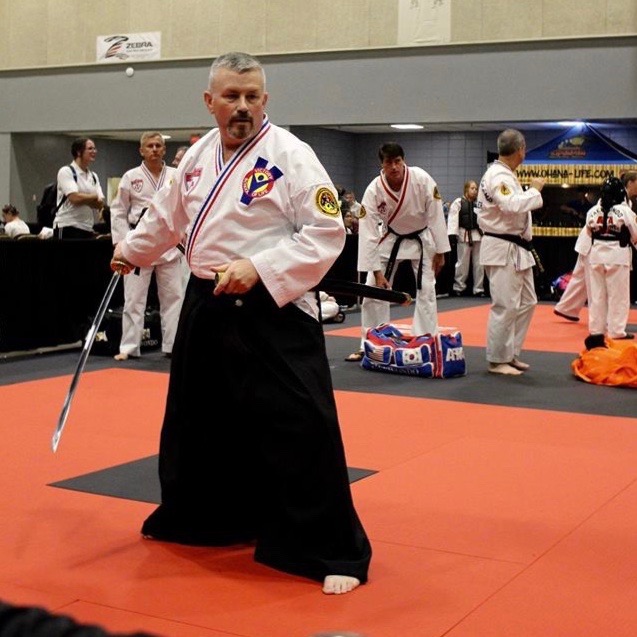
Calico Basin Trail Hike


Last weekend I took Paul on a trail hike around a small peak in the Calico Basin part of Red Rock Canyon.  This would be the longest and most difficult hike he’s ever done.  With water and snacks in hand, we joined with another parent and one of his friends from school and off we went.  


In the Google Earth image, we parked on the left side near the intersection of Sandstone and Kraft Mountain Loop, then started counterclockwise around the peak.  You can see the trail circle the mountain, then cut up and over, circling around the top of the image and back toward where we parked.  At the start, most of the trail was relatively flat, with elevation changes happening gradually.  The scenery was awesome and we made our way about half way around the peak on a trail that varied between powdery sand and gravel.  


At about the halfway point, the ground got a bit rockier and we came to the first of several obstacles, primarily large boulders, we had to climb up and over.  The challenge for the two parents was to coordinate our efforts to work the boys up and over the obstacles.  Usually one of us would go up first, then both the boys, then the other parent would come up last.  The boys were also challenged by this, not just because of the climbing, but because once on top of an obstacle, it took all the attention a five and six year old team of boys could muster to pay attention and be still.  They did great!


With the rock scrambles over obstacles behind us, we rounded the peak to turn back toward the car and had the opportunity to hike a trail up and over the peak, taking us very close to the highest part.  We rested at the top for a bit, enjoyed a little more water and took in the view, then made our way back down.


We spent the rest of the day resting and visiting my wife’s parents.  He’d given everything he had to a physically demanding day doing something he’d never done before.  He rode an emotional high too, probably fueled by regular statements by me of how proud I was of him for doing something that difficult for a little man.  Then bedtime finally came, his head hit the pillow, and he slept hard and peacefully.  When my bedtime came, I did too.  Being a dad, for me the day brought its own stress and excitement as I watched my son do things he’d never done before, some of these things with a bit of very managed risk, but risk nonetheless.  I fell asleep content and very proud of Paul.


Another adventure is behind us now: one more special experience I’ve had the privilege of sharing with my son.

It’s great to be a dad!
Saturday, March 2, 2013

Is Running Too Expensive?


I recently posted in a running community on Google+  “Running is about you and a pair of shoes.  Okay, and a shirt and shorts unless you want the cops involved.  But many in our sport are also geeks and end up pushing ourselves harder and further.  We want to know more about the how, why and what's happening to our bodies when we run.  We want to adjust and tweak.”


While someone just trying out the sport may watch others of us geek out, remember you don't need all the sporty gear and tech to get the job done.  You don't have to look good, be color-coordinated and sport all the latest gear.  I've said this before and really meant it: running is a form of playing.  Just watch kids; they just run.  They don’t geek out about gels, don’t wear fancy hydration belts or sport GPS watches and heart rate monitors.  Even though it’s fun to geek out with all the latest goodies, we can do just what the kids do, and it’s okay.  You, a pair of shoes, and clothing adequate for the climate:  that’s all you need, especially if you’re just starting out.

Shoes.  You don’t even have to get overly stressed about all the varieties of shoes out there.  Find a friend who runs and head to a running store.  Tell them you’re starting out, and you want an appropriate pair of shoes to give this running thing a go without breaking the bank.  Or, unless you have issues with your feet, hit a major chain sports store or even the shoe section in a department store.  Try on a variety of shoes and buy a pair that feels good on your feet and fits well.  You probably won’t go wrong with a recognized brand that makes running shoes, but don’t feel like you have to succumb to the marketing machine either.  Many of the big brands have a variety of shoes including several models a reasonable price.  Just remember, how your new shoes fit is important.  How they look is not.

Socks.  As a new runner, if you’re going to buy anything else other than shoes, buy yourself a few pairs of running socks.  Again, easy to geek out and find all sorts of custom running socks out there, and they all have a place in the sport.  Don’t spend the money to buy those just to find out you don’t like the whole running thing.  If you don’t already have something that’ll work at home, grab a few pairs of ankle-high athletic socks.  They’ll work just fine and keep you from looking like your grandfather when you wear those over-the-calf white, high school athletic socks with your shorts.  (I said you don’t have to look good, but you also don’t want to scare folks either.  (This is why I don’t run shirtless.  I don’t think I look very good without a shirt and I really don’t want to scare small children or cause passing cars to crash at the terrible sight of my pasty bod.)

Running Clothes.  Clothing is easy because new runners run short distances.  Somewhere in your stuff is a cheap pair of athletic shorts or sweats and a t-shirt.  They’ll  work just fine.  Go with long sleeves or throw on a wind-breaker if it’s chilly.  Don’t worry that all your friends who are veteran runners have those technical shirts that wick water away, keep you warm (or cool), and are rumored to deflect rogue cyclists and cars along with rain and snow.  Those shirts are great (and I own a bunch of them!), but I promise you can trot around the block or cover a few miles in those old shorts and tees.  Also, if you work your way up to entering and running 5K (3.1 mile) races, find the ones that offer a shirt.  They’re usually the technical tees and you’ll quickly end up with a drawer full of them.  Bottom line:  don’t pay the money to outfit yourself for a marathon when you’re just exploring those early, short distances.

Running Buddies.  Finally, find a buddy to encourage your running and not your fashion sense.  Related, runners are like anyone else and come in two basic varieties: demanding and encouraging.  The demanding ones will want to drag you “up” to their level immediately and make you another version of themselves.  They’ll try to drag you along (and probably suck the fun out of the experience).  You’ll be equipped to run a marathon before you’ve even decided if you like running a couple miles, and you’ll feel guilty you’re “not dedicated enough, wearing the right gear, or doing more or better.  They may be great friends, but they’re probably not the best running buddies.  They need to run with someone who is at their level, not with you.  You’ll also know a person or two who is happy to work with you to explore the sport just as you are: someone with the heart and mindset of a mentor or coach.  They’ll encourage you rather than drag you.  They’ll answer your questions and help you along the way.  Most importantly, they’ll allow you to become the runner you are, not a carbon copy of themselves.  If you’re a social person and already know you’ll be a social runner too, or you’ll need the encouragement, find that encouraging person and team up.

This advice has grown out of my lifetime of running.  I’ve mentioned before that my son will start running with me this Spring, not because I asked him to, but because he asked to run with me.  I assure you he won’t look like “Mini Me” when we start down the path.  He’ll look a whole lot like a kid who just ran off the playground than he does a little runner in all the technical regalia.


Now get out there and run like you mean it!

It’s great to be a dad!
Friday, February 15, 2013

A Big Week


The first week of February was a pretty big week for our household, and I’ll warn you now, there’s a little bit of parental love in here; I’m going to boast a little about my son.  This week he turned six, lost his second tooth the morning of his birthday, he tested through the end of the entire list of vocabulary words for the school year, and he won a Citizenship Award for fairness at school.


I’m not sure why having a six year old seems so different than having a five year old.  Perhaps it’s more psychological for me as a parent than any actual significance.  He’s still a child and I’ll always endeavor to ensure he gets to enjoy being a child at every age, but having a son who is now “grade school age” somehow makes things different.  It certainly feels different than when he turned five but it’s a little hard to quantify other than to say he’s a year older.  Some of the greatest changes while he was five have been his ability to spell and read.  He’s reading at the same level I was when I was in second grade, and unlike today, my classmates and I were reading in first grade.  (It saddens me that it seems the current standard in so many states is to have kids reading by third grade.  Nevada is one of those states.)

And tooth number two fell out on his birthday!  He was in the bathroom brushing his teeth and I heard him cheerfully exclaim, “My tooth fell out!  Dad!  My tooth fell out!”  We’ve told him that losing his baby teeth meant he was becoming a big boy, so he sees this as a good thing.  When I went in, he proudly showed me.  I asked him where his tooth was and he pointed at the drain.  I assured him that we didn’t need to see the tooth and that the hole where it had once been spoke volumes about how he was growing and healthy.

Then, two days after his birthday we attended the quarterly assembly at his school.  His school is Pre-K through 5th grade and is small enough that they assemble the entire student body during these quarterly gatherings.  In addition to the curriculum, each quarter the school focuses the students on a particular civics/citizenship attribute.  Last quarter was “fairness” and we were proud to learn that our son won recognition for being the best model of fairness within the kindergarden.  We weren’t necessarily surprised based on feedback we’d received from his teacher the year prior at the same school, and even from his kindergarden teacher in Germany two years ago.  What made this different was he was formally recognized in front of us and in front of the other students.

Then to wrap up an amazing week, even though the school year is just past half over we learned he successfully tested through the entire year’s list of vocabulary/sight words and he’s rifling through his spelling tests with equal skill!  All I can say is we seem to have done something right when we started him down the path of doing his homework in a disciplined way, rewarding him for getting it done, and ensuring we read to him (and he reads to us) nightly.

Related to last week, I think it’s important to point out he’s in a kindergarden with a formal curriculum; with real, nightly homework; and high standards of conduct for the kids.  But the school does a fantastic job of teaching the kids at their ages rather than pushing them too hard.  In other words, they aren’t pushing the kindergardeners to be first graders, etc.  They absolutely expect them to be good kindergardeners in order to be ready for first grade.  The kids know what’s expected, are solidly encouraged when they show progress, helped when they struggle, and I think this keeps school fun for them--as fun as school can be anyway.  We strive to have the same environment at home and do our best to always be mindful to let our (now) six year old actually be a six year old, to enjoy the things little boys at his age enjoy, and ensure while we’re laying the critical foundation of education, he also gets plenty of time to play and goof off.  It isn’t always an easy balance to keep, but so far so good.  I’m so proud of my son!

It’s great to be a dad!
Thursday, January 24, 2013

My Second Half (Marathon)


I ended last year with my first half marathon under my belt.  As the New Year approached I began forming personal and professional goals for this year: complete my resume and start searching for the job I’ll eventually move into between now and the Summer of 2014, plans for what Steph and I might do for our 20th wedding anniversary this coming Summer, and a few running goals.  While I haven’t locked specific races down, the running goals had gelled to include running two more half-marathons, and my first full marathon.  Little did I know I’d complete one of those two half marathons this month.


Not long after I finished the Rock ‘n’ Roll Las Vegas half marathon early in December, I received an email encouraging me to consider running the Rock ‘n’ Roll Arizona event on 20 January.  I learned that these two “desert” races are linked in that if you complete them back-to-back, you get an additional finisher’s medal.  It’s amazing what someone like me will do for a t-shirt and some ribbon with a medal on it, and so I signed up and rolled right back into training.

With training complete, I drove down to Tempe, Arizona, stayed with friends over the race weekend and set off on my second half marathon.  Like my first one in December, the race was pretty much everything I had hoped it would be and as is the case with all adventures, I learned a few more things about myself.

It wasn’t a fluke.  If you can do something significant twice, it’s probably not a fluke.  Not that I thought the race in December was a fluke, but running a particular distance once means you can do it once.  I followed a training plan and the race went flawlessly, but somehow it felt great to do it a second time, especially not long after the first race.  It seemed to remove any chance of doubt that it might have been a one-time experience in my life.  Consistent with my goals, I just showed myself I can do more.  That makes me happy and frankly builds my confidence in myself as a middle-aged man.  I didn’t doubt I could complete the Arizona race, but having mental confidence in the ability to do something is clearly important; actually doing it is the proof.

The base.  For many years I’ve heard and read runners talk about building up a base, and that that base essentially becomes a permanent fitness foundation they can rely on during those times of rest or injury.  Knowing it’s there is one thing, but seeing the practical effect it has is exciting.  I’ve mentioned previously I’ve run for most of my life, but generally shorter distances:  10Ks and below.  Having trained for two half-marathons within two months of each other let me see a little bit of what that base does.  After the December race, I was pretty sore for four days or so, and still a bit achy for a week to 10 days.  No injuries, nothing bad, but my body was clearly telling me it noticed I had just done something that I’d never done before.  I remember saying after completing the race that mentally I could do it again right then, but physically I needed to recover.  After a week or so I was running again with no issues at all.

The day I completed the Arizona race I felt just as sore as when I completed Vegas, but there was a big difference the next day:  in terms of being sore or stiff, my body was almost completely back to normal.  The only way I can explain it is to assume I’d built up a base more consistent with the half-marathon distance.  I didn’t expect to recover so quickly and it came as quite a pleasant surprise.  Still, I gently and patiently stepped back into a running routine after the race rather than risk overdoing it.

People are people.  I think it’s less obvious during shorter distance races, but it becomes very evident in longer races that just as with anything else we humans do, there are awesome people and...let’s just say “less than awesome” people.  Okay, I won’t beat around the bush.  In large groups, people run like they drive or walk through the mall:  there are some rude folks and frankly a few idiots out there.  Runners are an awesome and often selfless community, but it’s no surprise that people are people no matter where you go.  More on this in a later post.

The fine folks at Competitor Group.  I’m sure all races, especially endurance-length races, have their issues and some will always be better than others.  Having sampled two separate Rock ‘n’ Roll Marathon Series events though, I think Competitor is doing an awesome job with these races.  Both races I participated in had a variety of issues, but nothing that ultimately diminished the overall experience.  For folks who are looking to train for and run their first half or full marathon, I’d encourage you to seek out one of these Rock ‘n’ Roll series events.  Depending on personal preferences and who you ask, I’m sure there are better races out there as well as many that are worse, but so far for me these events have been a quality experience.  Add the particular experience of hearing local bands perform while you’re running makes it special beyond just the race route and location itself.  Not to sound like too much of a groupie, I absolutely plan on running other races that aren’t affiliated with the Rock ‘n’ Roll series, but I'm also going to seek out and enter more Rock 'n' Roll series events.  My point is that these two races were well done and I felt, worth the time and money I spent to participate.

Back to running, goals, and fatherhood.  I’ll most certainly continue to work toward running another half and my first full marathon this year.  The other “goal” I have is to start running with my son.  I didn’t ask him to start running with me; he asked me if he could start.  So this Spring we’ll step out together and see how he likes it.  Just as my Dad did with me, I won’t push him.  Instead I’ll encourage him and hopefully this becomes yet another thing we can enjoy and share together as Dad ‘n’ Lad, as we continue through life’s journey.

It’s great to be a dad!