Wednesday, May 18, 2011

Stability During The Move

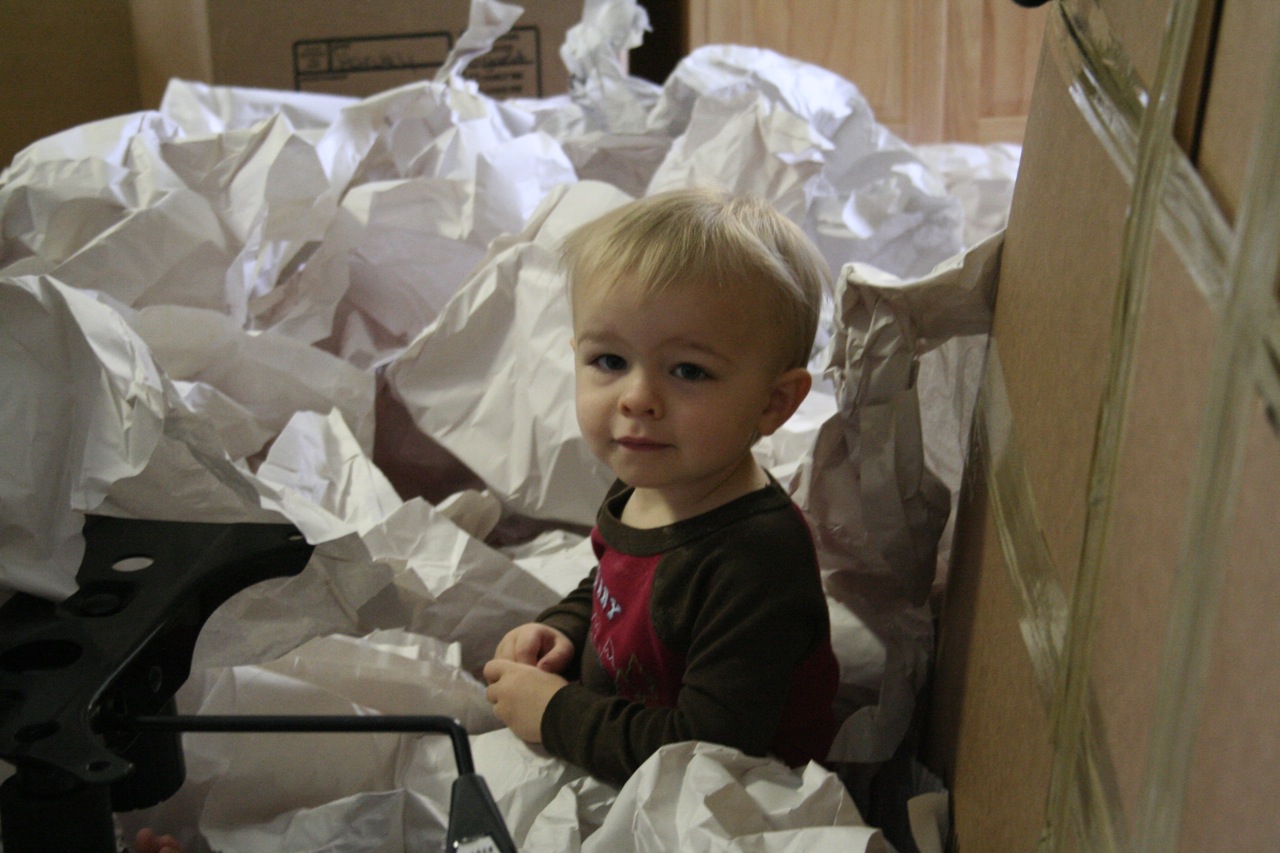
The last week has been pretty chaotic in the house due to our pending move from Germany back to the U.S.  In spite of the turmoil, I’ve enjoyed watching how my son’s reaction to the process that moves an entire household from one place to another.  The last time we did this, Paul was only a year and a half old.  It was all adventure and no real stress for him.  Now he’s four and taking it all in--an interactive participant in everything we do.

About a month ago we shipped our dog to my wife’s parents.  That took a little explaining.  Steph’s mom has been here for the last few weeks as we’ve prepared the house and had the packing crew here.  Over the past five days we worked to set aside the things we need to keep with us for our final month here, and shipped away everything we own.  As I type this today, we have an empty house except for a small amount of clothing, books, temporary furniture, our tech, and a TV.
Paul’s done very well with the whole thing this time, watching with interest, curiosity, and with some trepidation as he’s seen everything disappear from the house--the majority of which went during the last two days.
Then this morning he was anxious about going to school.  There were tears.  No doubt it was due to seeing so much change happening at home--where he draws his strength and stability.  With all that unhinged, I’m surprised he hasn’t been more nervous.  We reassure him and as I’ve written about before, continue to encourage him about the adventure we’re on.  Yesterday we told him the men who came into the house to pack us out were wrapping everything carefully so they can bring all his things back to his new house and new bedroom in Nevada.  I can tell he understands, but his eyes tell me he’s unsure and nervous.  I almost wonder in the back of his mind if he’s worried Stephanie and I will disappear next.
I wrestled with making him go to school or letting him stay home.  I decided he needed to go to school.  The struggle in my mind was over how to best reinforce stability for him in the midst of incredible change.  There’s no right answer to blanket every situation like this for my son, or for other children in the same circumstances, but my decision this morning was based on school itself being a constant for him.  While everything else seems to be changing, school hasn’t.  School is still part of the routine, and in its place.  His teachers and friends are there waiting for him and eager to learn and play.  Stability.
This morning was a tough little moment for me as a dad.  This parenting thing is definitely art.  It’s awesome, exciting, incredibly fun, and exceedingly difficult.  Then again, of course it is--it’s pure love.
It’s great to be a dad!

Sunday, March 6, 2011

It's Wake-up Time!

Paul has a digital clock in his room.  He can’t really tell time but knows his numbers, and knows he’s not supposed to wake us up before the first number is seven; any smaller first number and he can play quietly in his room; any number bigger than seven and it’s okay to come out.

During the week his past week, I was already gone for work and sometime around 6:40 a.m. Paul calls out to Steph, “it’s wake-up time!”  She glanced at the clock in our room, told him it wasn’t and to go back to sleep or play quietly.  A few rounds of “yes it is, no it isn’t” ensued before Steph finally told him, “if I come in there and the first number isn’t seven, I’m going to be angry with you.”  Paul all but challenged her to come and see.  She got up and headed in.
Paul is four and I suppose some of you are already thinking Steph will walk in and discover he had somehow changed the clock.  While it’s possible, this isn’t what was going on.  She walked into his room, looked at the clock and saw it was displaying the right time, still a bit before seven.  She pointed at the clock and told Paul, “son, look at your clock.  It’s not seven yet.”  Paul’s response?  With absolute sincerity, he pointed at the same clock and said, “Yes it is Mom, but look.  The six is pretending to be a seven.”
This same week on two other occasions, both after the “six pretending to be a seven” incident, he was up early and told us it was time to get up because the sun was already awake.  Over the years I’ve become a morning person, so this doesn’t bother me; I’m usually up and going before Paul, regardless of the day of the week.  (As I write this, I wonder how and when I hit the point in my life when “sleeping in” means sleeping until six in the morning...)  Anyway, I’m usually up.  But Steph’s definitely not a morning person, so during the week anything earlier than seven is getting up early for her.  The days I don’t work are the days she can truly sleep in and I get to start the day with some quality dad-and-lad time.
The day will come soon when Paul will change the clock and think he’s done something sneaky.  I also know we’re not too far from allowing him to come out of his room even before we’re up, as long as he plays quietly.  Until then, I’m proud to see his young imagination racing along.  The six is pretending to be a seven now, and being creative enough one day to change the clock--that’s my amazing, awesome son!  As I said, and as I tell him every night I have the privilege of putting him to bed, I’m proud he’s my son and I’m proud to be his father.
It’s great to be a dad!

Sunday, February 27, 2011

Moving Through Life


I’ve mentioned it before, but my whole life has been migrant.  I was born on a military base, grew up in an active duty military family, went to college and joined the military.  All I’ve ever known is moving every 2-4 years, with very rare exception.  Through the years, I’ve always had folks I’ve met “locally” tell me they can’t imagine how hard it is to constantly move from place to place and never put down roots.  I know what they’re asking, but honestly, I can only imagine what their lives are like, never moving and having to live in the same place without moving.  Sometimes I know I desire the chance to see what it’s like to stay in one place for a long time, while some of my stationary friends desire the experience of my adventures, always seeing new places.  In the end though, I can only imagine what the difference is like.  I can’t really appreciate staying still it other than academically.  As an adult, this lifestyle comes with its own excitement and frustration, but it’s always boiled down to a part of the routine of my life.  Having grown up this way, I’m sensitive to ensuring my son is best able to deal with the stresses moving puts on him as a little guy.


We should move this Summer, sometime in the next six months.  Steph and I are already talking about it with Paul.  We moved the first time with him when he was one and a half and he has no memory of it.  This time, he’ll be four and a half.  He has a small circle of friends here.  He knows what it means to get on a plane and travel, but we’ve always returned to Germany--the only place he thinks of as home.  We’re already anticipating him asking to see his friends or to visit places here in Germany once we make our “permanent” move.
Steph and I have started doing the same thing with Paul that my parents used to do with me: taking about the pending move as an adventure.  He hears us talk with each other and with him about the amazing chance to get to see another new place, more cool stuff and to meet new friends.  We don’t talk about who and what we’re leaving behind, especially from his limited perspective.  When I was small, moves seemed so final, but life became an adventure and we still get to experience quite a bit of it through airplanes and automobiles.
After spending my entire life in military service, I’ve learned the world is small and getting smaller every year.  We have friends we continue to cross paths with because we’re assigned together again, or simply because we visit one another.  Paul will continue to see many of them too, and unlike my young life, there’s a good chance we’re only an assignment or two from retiring and truly settling down.  Paul will still have the greater part of his youth spent living in one place, with all the associated pros and cons.  As for us, we won’t mind taking him back to see the places and meet the people we’ve enjoyed over the years.  The adventure will continue!
It’s great to be a dad!

Saturday, February 19, 2011

Get The Wax Out Of Your Ears

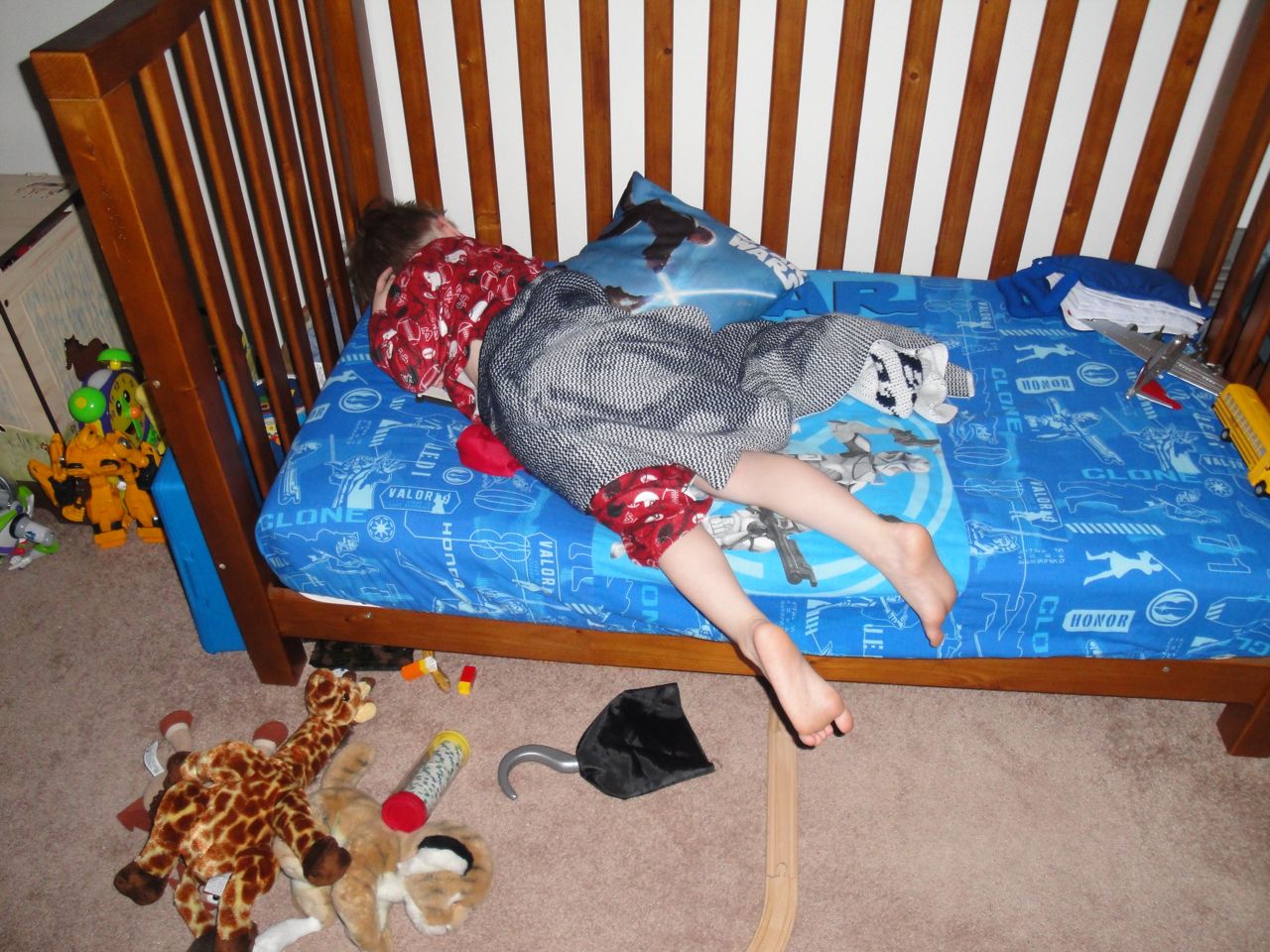
Like all healthy kids, my son has made the transition from infant to toddler, and now to four year old child.  No more toddling.  Now it’s all about racing, running, crashing.  Everything is fast, furious and exciting, only punctuated by a wipe-out, or a nap when he literally runs out of energy and makes a rapid transition from active to sleeping.  It usually takes about a minute once he gives in.

Along with those changes comes wax in the ears.  As the oldest child in my family, I remember hearing my parents routinely tell my sisters to “get the wax out of their ears.”  More and more often I hear myself saying similar things to my son, especially when I have to stop him from whatever he’s doing and make him look at me as I say, “listen to me.”  It seems about half the time I tell him this, it’s to stop him from doing something I know will lead to injury.  I may not be the smartest guy around, but the wisdom of 47 years definitely trumps the zeal of four.
My son, again like all kids, gets the wax out, acknowledges what I said, and the all too often lets what I told him go in one ear and out the other--something else I remember hearing my parents say to my sisters and I.  As all parents know, this comes with some measure of frustration as you strive to strike the balance between the strictest of enforcement and prudent liberty that follows the warning.  
One of those acute moments of frustration happened the other evening.  My son was all spun up and bed time was approaching.  (By the way, I’m convinced “spun up” is a statement of middle-aged denial.  It’s how we gently admit that we don’t have the strength or energy we used to have, especially when it’s obvious as we watch our kids.)  I marshaled him into the bathroom to brush his teeth.  The blur of motion and energy continued as he climbed onto the small stool in front of the sink.  Then came the series of warnings:  stand still or you’re going to fall off the stool and hurt yourself.  Are you listening to me?  Stand still.  He responded with an “okay”, then continued to dance around.  Mere seconds later one foot comes off the stool and Paul hits the side of the sink with his cheek as he unintentionally took an eight inch step down.  Ouch.  For Paul there was a stunned moment, then tears fueled by pain.  And for me, frustration.  I was torn between two simultaneous desires.  I wanted to hold and comfort him, and ensure he was okay (which I did).  I was also angry and wanted to scold him for doing the very thing I just told him not to do, for the reason he was now crying--injury and pain.  (Which I also did after I was sure he wasn’t injured badly.)  In those moments, I reminded myself that my job was to lovingly comfort and teach my son, and to reinforce what he chose to dismiss.  Even though I was frustrated, it wasn’t lost on me that to a great extent this specific instance of the problem was self-correcting.  I warned him he could get hurt and told him how to prevent it.  He listened and applied that guidance with all the wisdom of a four year old and chose to dismiss what I said.  His close encounter just seconds later with the sink and the resulting sore cheek made it clear what the consequence of not listening were.  And although I was angry, I had the awesome role of holding and lovingly correcting my awesome son.
I would never wish pain on anyone, especially a child, but this life comes with pain.  I think we need it for a variety of reasons.  At times it provides contrast to pleasure and ends up enriching the good things we enjoy.  At other times it reinforces the cost of unwise action.  Even then though, I hope when pain comes, at worst it’s only a shadow and caution for the wounded of the worst things that could happen.  One of my favorite authors, C.S. Lewis, wrote that “pain is God’s megaphone.”  I think he was right.  And at times like this one in the bathroom, although undesired, it clearly serves as dad’s megaphone.  I never had to raise my voice; my son understood (at least for a little while) my caution to him was out of love.
The rules are the rules, parents must be obeyed, but some things just have to be learned through experience.  Authority matters, but learning comes through words and deeds.  The real world exists in the middle and in the fine tradition of parenting, we strive to set rules in a loving environment that are reasonable and enforceable.  Paul needs to learn when we tell him something, we mean what we say.  But we also need to let him grow through experience, often associated with the risks of scraped knees, bumps and bruises.  Apparently this is especially true with boys.  This frustration, and at times the associated fear...it’s real, but I wouldn’t trade it for the world!
It’s great to be a dad!

Sunday, January 30, 2011

Under the Rodeo Moon

The new year is under way and looks like it’ll be a busy year of parenting, husbanding and working.  Of course, my time with my wife and son serves as my anchor point and refreshment to keep me going through the routine of the business of life (working a full-time job).

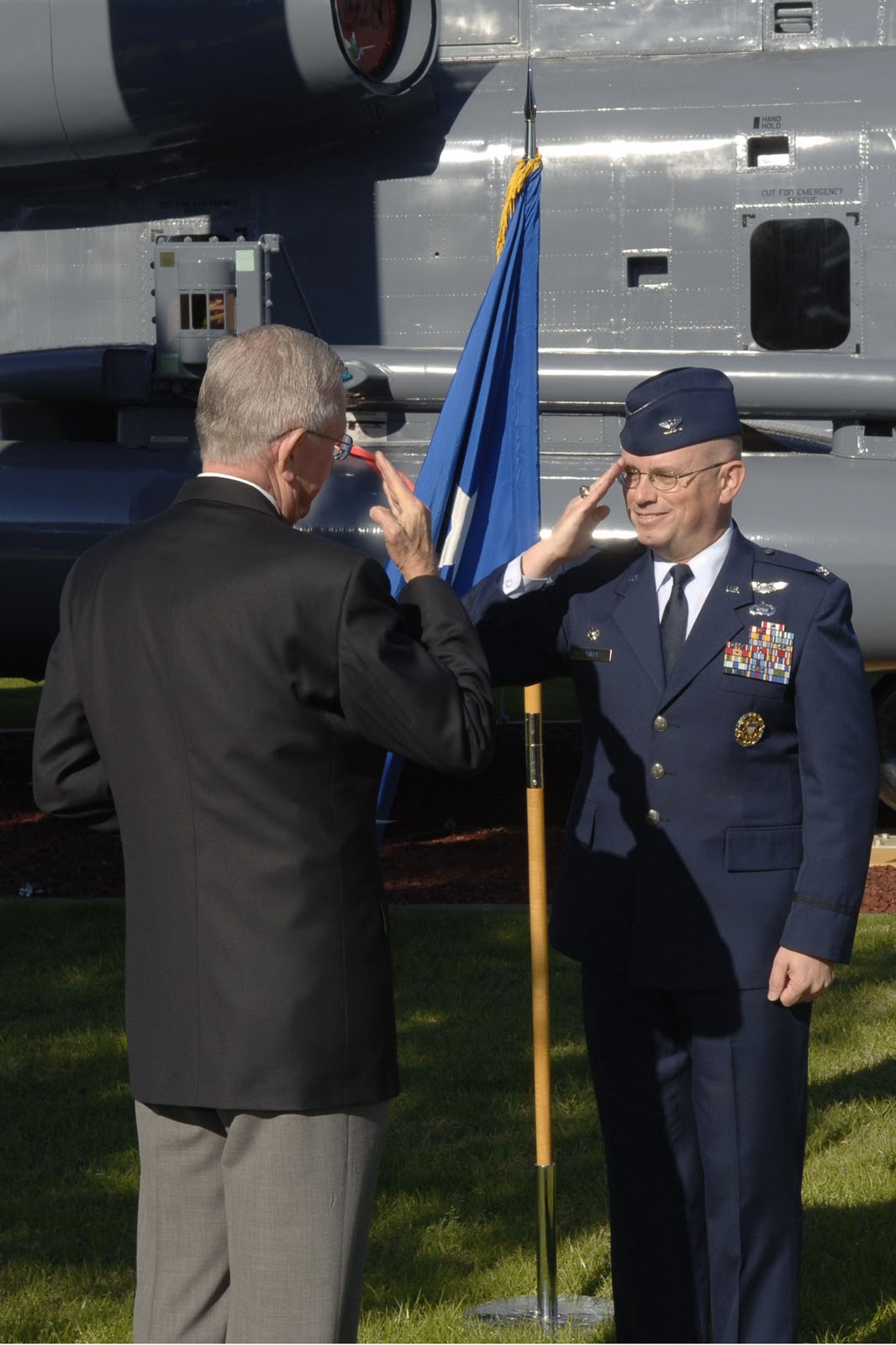
As you may know I’m a career military officer, following in the footsteps of my father and grandfather.  The direct line breaks there, but the thread still runs back quite a distance.  My father was a career Air Force officer.  My grandfather on my mother’s side was a career officer as well, having joined the Army as an aviator, was one of the advocates for a separate Air Force, and ultimately retired as an Air Force officer.  Both of my uncles wore the uniform.  Several other close and distant relatives did and still do.  I was born into an Air Force family, on an Air Force base and have only known a migrant life.  My father was on active duty when I left for college and when I graduated, I put on the uniform.
This summer my family and I will move again.  The upcoming move makes my 20th “permanent” move.  The first six were during my childhood; the rest have been since I left home to strike out on my own.  There have been a handful of other moves as well, but not the kind folks in my world would class as permanent.  Sprinkle in deployments and other temporary duty and I’m even surprised at the volume!  My wife and I were married along the way and counting the upcoming move, she’ll have made half of these moves with me.  Paul was born during my last assignment (on an Air Force base) and will experience his second move this Summer.
The point of that bit of history isn’t to brag, to impress, or to seek sympathy.  I’m not trying to champion or warn people away from the military lifestyle.  Instead, I want to point out one of the positive consequences of this kind of mobile family life.  My family, immediate and extended, has become the anchor point.  While this is certainly true of folks who don’t move as often as we do, I think the emphasis on family is slightly different when they’re the one constant element in an otherwise changing world.  While our extended families are scattered across America, they still sit at the center of our lives.  As for Steph, Paul and I, we three are definitely the one immediate and consistent element in an otherwise fluid world; we are the constant while everything else changes.  This was true for Steph and I before Paul was born, and his addition to the family almost four years ago added to the strength of the core.
As a result, my life and our lives together have been a great adventure.  We have lived in some amazing places and spent an incredible number of hours driving from one to the other.  Instead of a burden, we’ve been able to see so many things most folks never get to.  In many cases as we move through the world, we have seen (and lived in) places that others only hear about.  Even better, we have had the privilege of enjoying so many incredible places that you’d never hear about--the small towns, amazing little diners, conversation with another family at a rest stop, and all of the urban and rural scenery in between.  We’ve slept in fine hotels, in the most basic of motels, and even camped on the side of the road.
Chris LeDoux was a fellow child of the Air Force and rodeo cowboy, and is one of my absolute favorite musicians.  When he penned the lyrics to “Our First Year” and “Rodeo Moon” he captured our very real adventure better than I ever could.  Here are the lyrics to Rodeo Moon:
I took her daddy’s old two-horse trailer
I patched a place in the floor that was bad
And then we loaded up her barrel pony
And a riggin’ bag is all that I had
We left with our suitcases filled with desire
Four hundred dollars and two good spare tires
Sometimes we’d sleep in a motel
When we’re ridin’ that hot hand of luck
And sometimes we’d stay at a friend’s house
Oh but most times we just slept in the truck
At nighttime you’d find us out in the fast lane
Stayin’ one step ahead of the snow and the rain
Now our windshield’s a painting that hangs in our room
It changes each mile like a radio tune
With God up above, we’ll make it on love
Under the rodeo moon.
When Chris LeDoux and Toby Keith penned these words, they literally could have been watching Stephanie and I.  The details are ours, right down to the trailer we patched, the spare tires, the barrel pony, and the limited cash in our earlier years.  (Thank you for these songs, Chris.  I miss you.)
As Stephanie, Paul and I continue down the road for the remaining years I have in the military, I hope my son grows to appreciate the blessing of our amazing world in the same way.
It’s great to be a dad!
The sketch of Steph, Paul and I drawn by Howard Tayler.  Visit Schlock Mercenary (www.schlockmercenary.com) to see his work.
You can find “Our First Year” on the album “Cowboy” and “Rodeo Moon” on “Horsepower.”  Please visit Chris' official website (www.chrisledoux.com) for information on these and other great albums.

Wednesday, December 22, 2010

Easy and Hard

You try to make something easier, only to discover you’ve made something else harder.  As we say in the military, a plan never survives contact with the enemy.  Another related saying goes something like this:  if you want to make God laugh, tell him your plan.  Neither of those fully represent the point I’ll try to make, but they come close.  Stephanie and I went through a variety of phases relative to having children over the years of our marriage.  Honestly, we began with very little interest in seeing our family grow.  As years passed, and probably as we matured as a couple, our views on parenting softened a bit.  This trend continued as more time passed, fueled not only by our own relationship, but also by several practical things.  Primarily it revolved around my advancement in my career and the associated increases in pay.  As we grew more financially comfortable, our comfort level with becoming parents increased.  It was reinforced by a second influence: several of our friends who had kids and lived the life of parents openly and honestly in front of us.  Eventually we found ourselves actively planning to have a child, as middle-aged folks.

The migrant lifestyle.  One thing we discussed early in our marriage that weighed positively in our plan to wait to have kids was mobility relative to my job.  The plan was that we would have a child at a time that would allow me to retire from the military around the time he entered grade school.  So far, so good--Paul was born shortly before I hit my 21st year of military service, so technically I’m already retirement eligible.  Not that I wouldn’t continue to work, but Steph and I agree that we’d prefer to raise Paul without having to move every two to three years.  Don’t misunderstand though, especially any other military dads reading this.  I absolutely love my career.  In fact I was born into and grew up in a military family that’s spanned more than three generations.  Our desire isn’t one based on a dislike of a the military life or its migrant lifestyle.  For Steph and I it’s more about reducing instability, and moving every two to three years is something we can control.  I’d be less than honest if I didn’t also factor in the impact of temporary duty and deployments in addition to the regular moves.  Opposing this, however, is that I have enjoyed very real benefits that were the direct result of a childhood of chronic moving.  I’m sure for every disadvantage, there’s an equivalent advantage associated with seeing and living in places all over the country and world.  If I retire from the military sooner rather than later, my son won’t share those same benefits.  In the end though, Steph and I are favoring the advantages associated with being less migrant.

Local community.  This would also allow us to settle into a community and establish the associated long-term relationships, especially with the teachers who we’ll entrust to help us educate our son.  Don’t get me wrong; military children tend to do very well academically for a number of reasons.  I suspect in part, this because education is important to military professionals, but even more, because truly global experiences matter and those kids carry that cultural and academically diverse set of experiences right into the classroom.  Socially, it’s not that we don’t have long-term and significant relationships with many of our military friends--we definitely do--but they’re as mobile as we are and most of us won’t settle in the same place once we’re done with our military careers.  Honestly, I hope I can form the same level of intimate and immediate trust with my neighbors once I retire as I have with many of even my most recent acquaintances in the military.  Think about this--every time I move, I instantly have a group of people around me that I would hand my car and house keys to, trust to receive the shipment of all my earthly possessions, and can trust with my wife and son without hesitation.  Amazing since often times I’ve never met many of these people before arriving at my duty station.  I don’t ever want to diminish just how unique and wonderful that kind of community is.
And so here we are, according to “the plan,” within a few years my wife and I should step away from the military life and settle down somewhere a little more permanent.  Two very real things drive me toward what has become an imminent and heavy decision: I’m not getting younger, and I hate spending time away from my son.  The risk of having to spend months or even years away from my son is almost unthinkable.
One thing I’ve learned you can’t anticipate as a first-time dad: the emotional bond that exists between a father and his son.  For my entire adult life I’ve been a career servant of the State.  Now I’m a dad; I’m actually somebody’s dad!  I would give my life for my country and more specifically its citizens and our way of life.  I would also give my life for my wife and son for reasons that another husband and dad would understand, but I think it can be summed up by saying family isn’t the same as country.  And so there’s the tension.  The conflict for my time isn’t binary though.  As mentioned before, I have to work to pay the bills, and to be honest, even if I were independently wealthy, I’d still have to work at something.  All dads can probably identify with the struggle, but I think this struggle is different for a dad depending on where he is in his own life: depending on how old he is.

When I was younger, certainly when I was truly a young man, I remember living the adventure of the military life: working hard, lots of trips, deployments, etc.  I didn’t have kids but many of my colleagues did.  We trained and traveled a lot.  When we were away from home the discussions eventually came around to the things that mattered to us back home; for those of us who had them that meant our wives and kids.  (No offense ladies, but for the first five years of my career, I served in a unit that didn’t have females in combat positions.)  But we were young, and young men are bullet proof and fuller of the stuff that makes us men--energy, testosterone, zeal, idealism, etc.  The body and the brain were young.  (Now, in contrast I feel I have a 20-something year old brain but it’s living in a 46 year old body.)  Those of us who were married loved our wives; those who had kids loved their kids, and we didn’t like being away.  They were our stability and pivot points, but we were young and professional.  We went off to do our jobs.  The travel and work was exciting, at times dangerous, and while it was difficult to be away from home, somehow the adventures also had an equal pull.  For many of us, when we were home we thought about the excitement of being away, and while we were away, our attention turned back to home.
Now something has changed and I think it’s the result of growing older.  I’m not a fan of those guys who always need to tell the bigger story, always trying to one-up their buddy’s adventure or pain, and I’m not doing that here.  But based on my experiences and watching my friends over the years, there’s something different about being a first-time father later, rather than earlier in life.  I can’t prove it, but I think it’s easier for a young man to to balance the family when it comes to the tension between being home and being away from home.  I’m not saying marriage and parenting is easy for a young husband or father, but I think it’s somehow easier when contrasted with his middle-aged colleagues.  Even if I’m wrong and I’m the only one this is true for, I couldn’t have foreseen or understood the difficulty of spending time away from my son.  It’s hard when we men have to spend time away from our wives--if this isn’t the case for you, we probably need to have another conversation--but our wives are adults.  As hard as that is, I think it’s harder to spend time away from our kids--it certainly is for me.  Our kids aren’t adults and don’t understand the reasons for the separation. 

I suppose writing this is therapeutic.  In some sense, I’m certainly writing for myself, to help gel these thoughts and issues in my own mind.  Doing it in a blog though also lets me put a little piece of fatherhood on my sleeve for everyone else to see.  I thought the plan was good and would minimize certain difficulties: money, mobility, etc.  What I couldn’t anticipate is just how difficult it is to look at my small, young son through eyes that are more than 40 years his senior.  I’m convinced it’s a much different and more difficult view than it would have been through those same eyes when they were half as old.  Am I done with my time in the military?  No.  Am I closer to the end than the beginning?  Definitely, and my son has become the primary influence in the decision about when to bring this adventure to a close and begin the next, less migrant one.
Hopefully my words encourage other middle-aged dads and can inform the young men who follow and find themselves wrestling with some of these same thoughts and decisions.  Finally, maybe a few wives and even kids can be encouraged to know your men wrestle with these kinds of things.  We are men, with all the associated confusing, irritating and cool baggage it brings for those around us.  For many of us, the crusty exterior is there for all the right reasons:  to some extent, it’s the way we’re wired; but also we may need it to fuel the things we need to do at work.  Fortunately or not, those two realms within our lives aren’t binary and can’t just be switched on and off.  Regardless of the appearance on the outside though, these things still rage within us as husbands and fathers. 
It’s great to be a dad!

Sunday, December 5, 2010

Book Review: The Compleat Gentleman

The Compleat Gentleman: The Modern Man’s Guide to Chivalry (Revised and Updated) by Brad Miner (Richard Vigilante Books, 2009)

In this wonderful book, Brad Miner rolls an incredible volume of history and research into a single reference about chivalry, then applies it to modern times and modern manhood.  The book generally has an academic tone to it, but not in a way that’s distracting.  In fact, for what is essentially a combination of history and what today would be called “self-help,” the book is definitely readable and held my attention throughout.
Miner works us through the picture of the compleat gentleman by discussing the medieval knight (often used to typify gentlemanly behavior), then examining three persons as models or types:  the warrior, the lover and the monk.  He also distills the essence of the gentleman into a single Latin concept: sprezzatura, which he thoroughly examines throughout the book due to its rich, deep and complex meaning.  On the surface though, it simply means nonchalance; Miner says that to today it would mean “cool.”  Toward the end of the book, he summarizes his work by saying, “if ‘honor’ is properly the one word that epitomizes the character of a gentleman, then ‘sprezzatura’ is the last work about the gentleman’s ‘conduct of life.’”  He goes on to say, “There are two ways to look at a fellow’s sprezzatura.  On the one hand, it means discretion, or, more grandly, prudence; on the other hand it means restraint, which may even be concealment.”
As you read, Miner will weave these concepts together with others, including the role of historic stoicism, and leave you walking away challenged and encouraged that no matter who you are or where you think of yourself relative to gentlemanly conduct, you’ll can make more of yourself.
At the end of the book, Miner quotes Rudyard Kipling’s poem “IF” (available through The Kipling Society at http://www.kipling.org.uk) as his closing and as “the best short summary of the compleat gentleman’s profession.”  If you’re not familiar with Kipling or this poem:

If you can keep your head when all about you
Are losing theirs and blaming it on you;

If you can trust yourself when all men doubt you,
But make allowance for their doubting too;
If you can wait and not be tired by waiting,
Or, being lied about, don't deal in lies,
Or, being hated, don't give way to hating,
And yet don't look too good, nor talk too wise:

If you can dream – and not make dreams your master;

If you can think – and not make thoughts your aim;
If you can meet with Triumph and Disaster
And treat those two impostors just the same;
If you can bear to hear the truth you've spoken
Twisted by knaves to make a trap for fools,
Or watch the things you gave your life to broken,
And stoop and build 'em up with worn-out tools:

If you can make one heap of all your winnings
And risk it on one turn of pitch-and-toss,

And lose, and start again at your beginnings
And never breathe a word about your loss;
If you can force your heart and nerve and sinew
To serve your turn long after they are gone,
And so hold on when there is nothing in you
Except the Will which says to them: "Hold on!"

If you can talk with crowds and keep your virtue,

Or walk with kings – nor lose the common touch,
If neither foes nor loving friends can hurt you,
If all men count with you, but none too much;
If you can fill the unforgiving minute
With sixty seconds' worth of distance run,
Yours is the Earth and everything that's in it,
And – which is more – you'll be a Man my son!


Finally, a note for those who might mind, the author clearly writes from a Catholic perspective and defines himself as a classic liberal.  Even so, he’s never in your face with either and the points about being a gentleman don’t conditionally rest on either.  No matter what your religious or political persuasion, the book is informative and useful.
The Compleat Gentleman is definitely worth the time to read.  If you have an interest in the history of gentleman and chivalry, the book is a great anchor point for additional research, with plenty of references and a healthy selected bibliography.  I recommend this book to any man whether he’s a father or not, think it would make a great gift at the appropriate time for any young man, and will definitely be on my son’s reading list.
It’s great to be a dad!