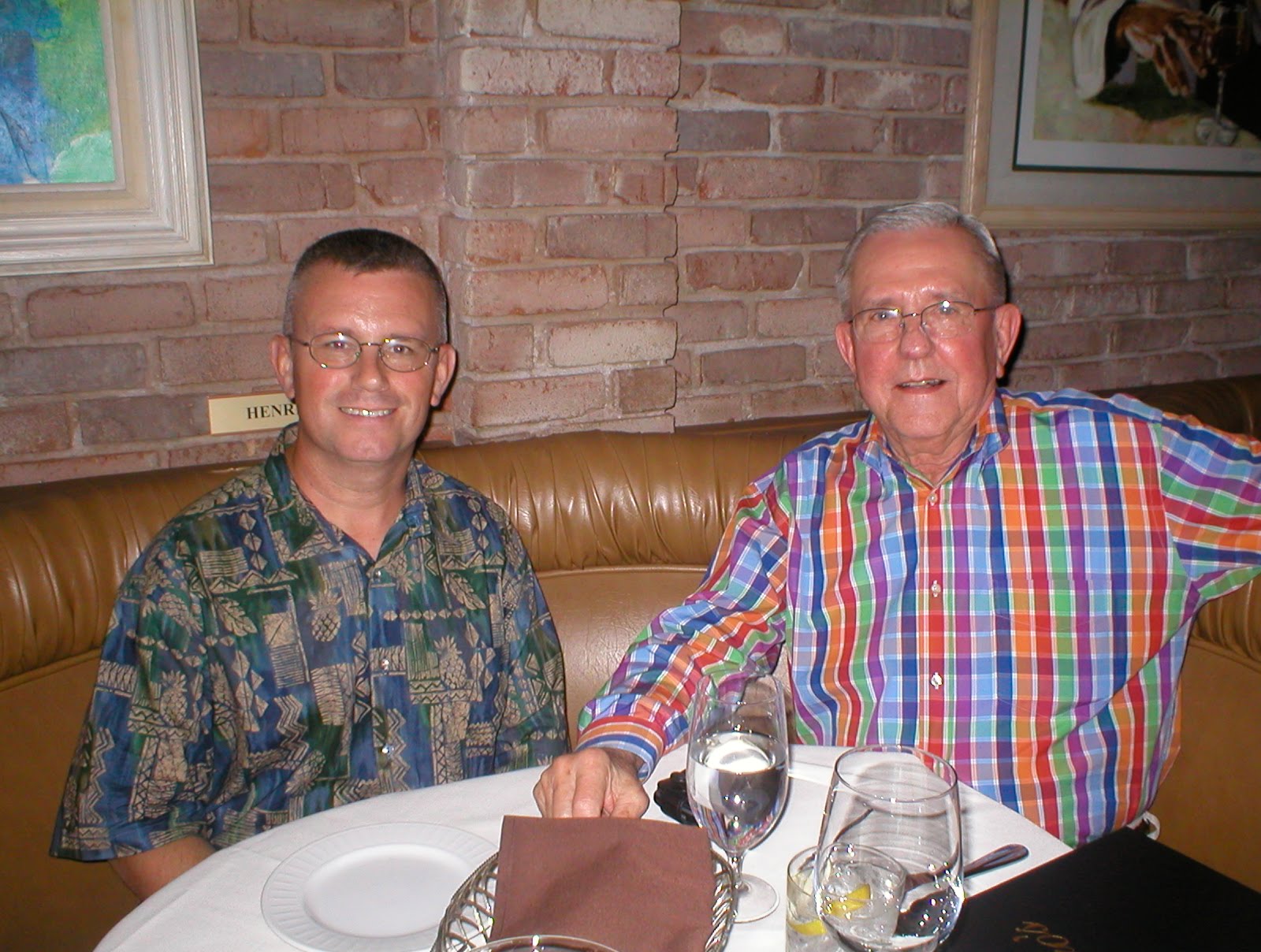
Sunday, July 25, 2010

Reflections (Part 2)

Last week I told you the story of the birth of my son.  Just typing that story out last week and reliving it in my mind brought joyful tears to my eyes again.  Although that wasn’t why I wrote it, I was flattered to hear from many of you who told me what I wrote resonated with you and apparently the stock went up on several brands of tissues.  As promised, here’s the rest of the story of my reflection on my wonderful wife and the birth of my son.  The emphasis changes a little here, from my amazing wife to the beginning of my own development as a first-time father.

Paul’s Pitstop Along the Canal
I mentioned my wife labored for 51 hours before Paul was finally delivered by C-section.  As you recall, he was breach, then on the day we were to originally have the C-section, he flipped over and was properly oriented for a normal delivery.  And then there was the marathon.  After Paul was born and we were all resting quietly in the Labor and Delivery Ward (L&D from now on), our doctor came to us to explain what caused the lack of progress.  It seems that Paul had turned his head to the side at about the time he started progressing down the birth canal.  As a result, the shape of his head didn’t line up with companion shape of the birth canal and he simply stopped.  No amount of labor was going to change it, especially since Steph’s body was properly trying to move him along, creating enough pressure that Paul’s head just wasn’t going to turn back.  In times past this could have (would have?) resulted in the death of both mother and child, but thanks to God, modern medicine, the wonderful skills of the medical professionals that took care of us, I enjoy the company of my beautiful wife and son today.

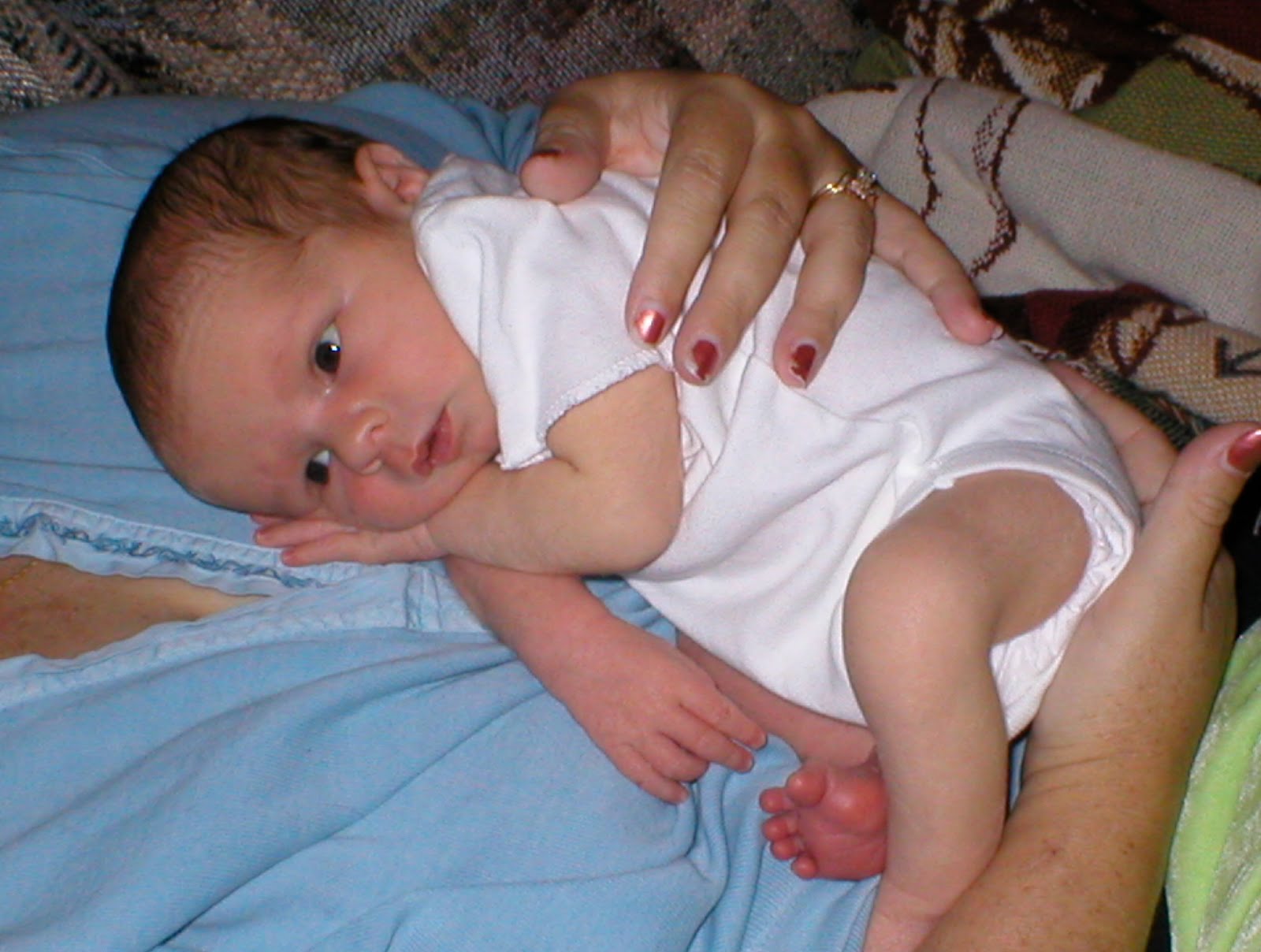
I learned a bunch of cool stuff as Steph rested and recovered, and began bonding with my infant son.  Steph “held” him for nine months and now it was finally my turn.  I was nervous but eager to learn.  He had his first bath and I learned how to change his diaper and swaddle him.  The Super Bowl was on with the volume down and Steph fed Paul his first meal outside the womb watching the game.  (I can’t make this up!)  At about halftime, Steph fell asleep and Paul and I sat with my new son in my arms, watched the game, and bonded.  And every now an then, I found myself weeping just for a moment.  It wasn’t for any specific reason.  I think it was that intangible and very real bonding--father’s and son’s hearts were touching.  It was, and remains, one of the best experiences of my life, sitting in the quiet and warmth of that room next to my sleeping wife who had just done something truly heroic, and holding my hours-old son.
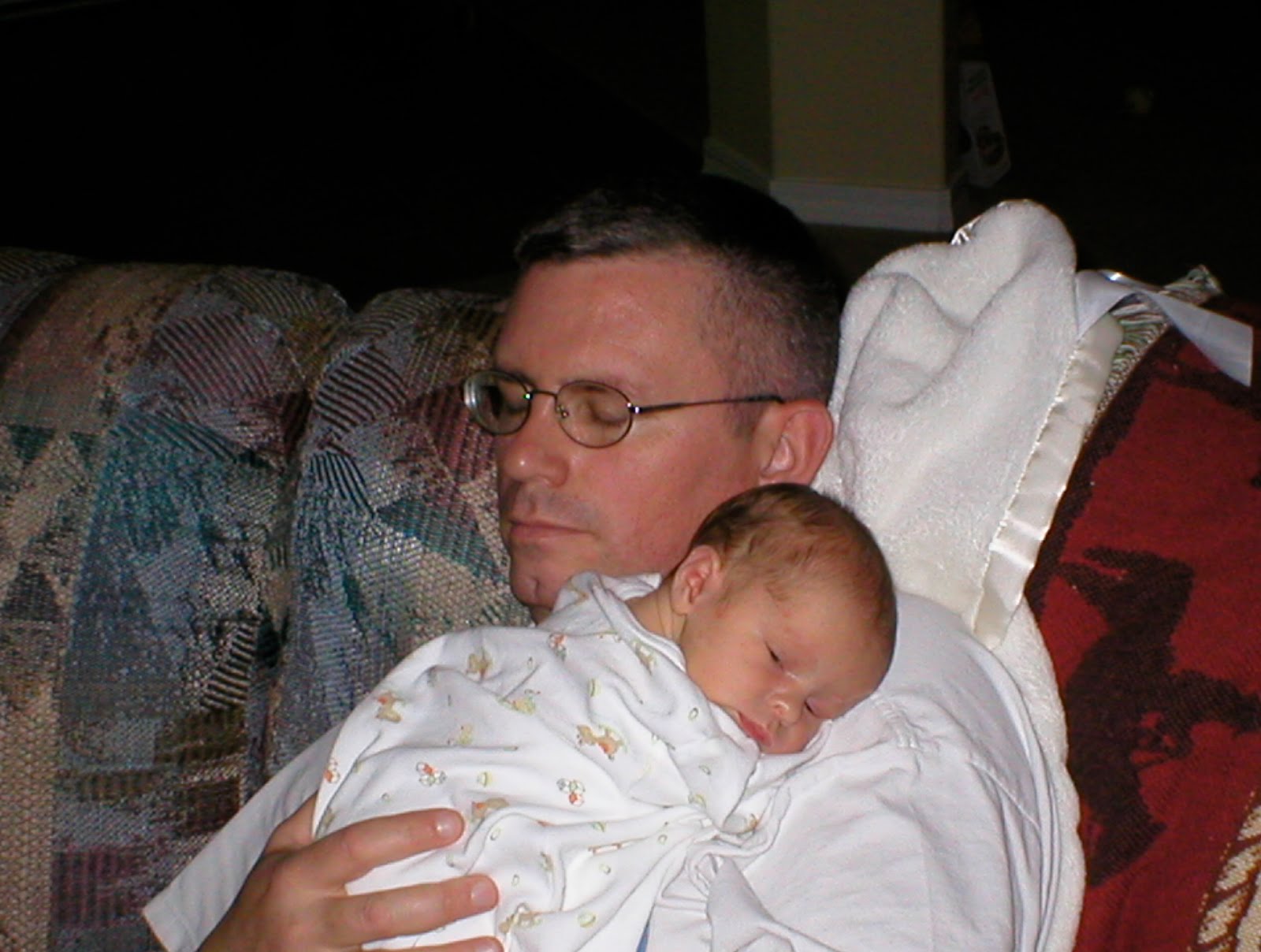
An Angry Dad
The next morning everyone was doing fine and the process began to do some final testing in order to discharge mother and son.  We were excited, tired and happy to think about taking our son home for the first time.  But there was this little thing called jaundice we had to deal with first.  He didn’t look jaundiced, so this came as a surprise when, as we were being discharged from L&D, we were taken upstairs by someone from another department.  It was the first we’d heard that this was the plan rather than going to our car and heading home.  And now I was angry in addition to being tired.
The change from pleasure with the L&D crew to thorough disgust for the “professionals” in the new ward was dramatic, none of whom could competently or authoritatively explain to me why we were even there other than to say, “your son has jaundice; his bilirubin levels are on the edge of high, and this will prevent a problem from developing.”  It made sense, but we couldn’t get a doctor to see us until I threatened to take my family and leave the hospital.  An orderly actually told me I couldn’t do that.  I didn’t mention to him that I could have snapped him like a twig and instead maintained my composure and told him he needed to rethink what he had just said.  We weren’t under arrest and no one could even confirm we were the right people who were supposed to be there.  I told him if a medical doctor didn’t come explain to us why we were in this new ward within two hours, in an adult manner, we would be leaving.  We had signed formal discharge papers in L&D and had not been formally readmitted to any part of the hospital.  As far as I was concerned, this was all a mistake reinforced by lack of any interaction with a physician or appropriate staff.  I wanted to see test results and have them explained to me like an adult.  I also wanted to know clearly and concisely what the “treatment” would do to remedy the alleged problem and how long it would take.  For those of you who are familiar, you know the treatment for an infant with elevated bilirubin levels isn’t cosmic and really doesn’t require a lot of explanation--it involves baking the boy under some incubator lights (technically called phototherapy, accomplished with lights or a photo-optic blanket) in a controlled manner.  Having a medical background I was actually familiar with the treatment, but didn’t like that no one with any authority or medical competence seemed to want to explain it to my wife and I.  I was literally packing our bags up again, when a doctor showed up.  I politely and professionally let him have it.  With the doctor’s apologies appearing genuine, along with his sufficient explanations for why we were there and for how long, we ended up staying through the next night to let Paul bake and went home the next day.
Don’t Look Into The Light:  Shaping a Father’s Heart
The real story is actually about the time that passed with Paul under those lights, especially through that night, and the thoughts and feelings that continued to emerge as a brand new, first-time father.  My wife was exhausted and I was beyond tired.  The hospital didn’t have a photo-optic blanket, so Paul was laying helpless in an open-sided incubator with ridiculously designed little goggles on to keep the lights from causing damage to his eyes.  For those of you who are parents, you know about infants--they have no motor control and so I worried about him knocking the goggles off and ending up with eye damage.  Designed as they were, they seemed to come off his head when he simply thought about moving.  And so I intended to sit up all night hoping to let Steph sleep as much as possible.  She was actually doing well and thankfully was able to sit up with Paul for part of the night, giving me about three hours of sleep.  But it wasn’t very good sleep and I was entirely consumed with this little son of mine and that my wife now had to stay awake even longer.  All Paul had known was nine months of comfort in the womb, then suddenly he’s on the bright, noisy and cold outside but in the protective arms of Steph and I, and before that dust could settle he has something awkward on his face and no real contact with either of us other than the sound of our voices and fairly regular adjustments to the goggles.
I still don’t know how a heart can be full of joy and thoroughly broken at the same time, but mine was.  What’s really beyond my ability to explain is although I couldn’t have loved my new son any more than I already did, every moment that passed as I sat awake with him my love grew.  My heart was full, but somehow it kept getting fuller.  A better picture of this is that my love for my son was growing deeper and stronger with every minute that passed.  I know this would have happened even without the frustrating side trip to the incubator, but this little bit of additional frustration and adversity simply highlighted it for me.
Homeward Bound
The next day, and two very tired parents later, we took our son home.  Everything was exciting and scary.  Was the car seat in right?  Was he warm enough back there?  Would his little head flop over too far and hinder his breathing?  Would we know since the car seat faces to the rear for safety?  I can’t stare at him the whole time; what if we get into an accident?  Somehow we made it home.  Since then, like all parents, we’ve received perfect support and great advice from a variety of folks within our circle of friends and family.  I think we’ve managed to do OK as parents so far.  It’s wonderful to have the experience of others to lean on, and to learn that you really can do this parenting thing--a subset of this marriage thing--without an instruction manual.  By the way, that last statement doesn’t mean you can’t raise a child without both parents.  Life is messy and things happen--at a minimum the “Ds” haunt many of us:  deployments (or long business trips), divorce, death.  There’s other stuff too, but to keep this truthful, after my own experiences these last three and a half years, it seems to me solo parenting isn’t the default or preferred situation.  It takes two of us to make those little, wonderful kids, and it seems two should bring them up.  When that can’t happen, I hope that same circle of family and friends is there to stand along side the parent flying solo.  
Honoring our Women
My wife Stephanie is amazing and she’s also a hero to me, on that same very short list I have with just a few other people on it, including my dad and both grandfathers.  Ladies, every one of you stands on a pedestal in my world, for many reasons.  In the absence of other reasons though, you still hold that special place for that most wonderful and miraculous thing you can do--bare children.

Men, if we don’t honor our women--all women, but especially our wives--then we’re not really men.  The word “honor” gets used a lot in certain circles, but I’m not sure many of us really understand what it means practically.  Not that I agree with every premise behind his statements, consider this amazing conversation between Robert MacGregor and his son in a scene from the 1995 movie Rob Roy:
Son:  Father, will the MacGregors ever be kings again?
Rob Roy:  All men with honor are kings, but not all kings have honor.
Son:  What is honor?
Rob Roy:  Honor is what no man can give you, and no man can take away.  Honor is a man’s gift to himself.
Son:  Do women have it?
Rob Roy:  Women have the heart of honor, and we cherish and protect it in them.  And you must never mistreat a woman, nor malign a man, or stand by and see another do so.
Son:  How do you know if you have it?
Rob Roy:  Never worry in the getting of it.  It grows in you and speaks to you.  All you need do is listen.
Men, all our circumstances are different whether we’re single, married, or fathers.  But we can’t afford to mess this up.  We live in the world and others see us:  other men, sons, women, and daughters.  Never be an ass; just be an honorable man.  
Single men, it’s OK to be the man that women want you to be and that younger men can genuinely look up to.  Be a real man of strength and honor--mentally and physically.  Don’t let yourself fuel the caricature that men are full of rudeness and too much testosterone.  Don’t go to the other extreme either though and be that ugly model of overdone pasta with no idea who you are or what you stand for, and who doesn’t know where to find his spine or what testosterone is.  If you’re a husband, you have a wife to love and cherish.  If you’re a father, you have sons and daughters to raise.  For those of you with sons, join me in my hope that we raise our sons well.  We are men.  If you’d prefer not to be, like last week, feel free to send me your Man Card; I’ll quietly and discretely dispose of it for you and we’ll never speak of this again.
It’s great to be a dad!

Sunday, July 18, 2010

Reflections


I recently picked a book up while browsing at a local bookstore.  Fathers and Sons: 11 Great Writers Talk About Their Dads, Their Boys, and What It Means To Be A Man is a collection of essays written by fathers, sons, and one daughter.  Only part way through the first essay in the first section of the book, entitled “The Beginning”, I found myself fighting indoor allergies, sweaty eyeballs, um, alright--tears.  Awkward to say the least, as I was sitting in a bookstore sipping coffee.  It was an unexpected reaction to an essay written by someone I don’t even know.  I can't say it brought back memories because what went through my head hadn’t been forgotten, but the essay did result in fragmented memories coming back together that hadn't been that way since the birth of my son almost three and a half years ago.

I haven't appropriately honored my wife for bringing my son into this wonderful world in this forum; it's overdue and the time has come.  I also haven't talked about those first hours in the hospital after Paul was born and the initial thoughts that went through my head a brand new dad--not so much the lofty philosophical thoughts (because frankly, there weren't any), but rather my initial caveman reaction to going from being a father who's son is still on the inside to being a father with a son in my arms.  So i'll write these thoughts and reflections down because I need to for myself, but hopefully those of you who read this will carry something away as well.  Dads, especially you first-time dads, assuming my experience isn't unique, maybe you'll find you're not alone; there are other men standing around you--standing with you in the fraternity that is fatherhood.  Moms, if you have a husband who doesn't like or want to talk about his fist contact with fatherhood, maybe this will give you some glimpse into your man's inner workings.
Labor
Our pregnancy was pretty much a standard one.  Steph dealt with gestational diabetes and pregnancy-related hypertension, but that's not uncommon and it wasn't ever a real issue.  Good advise from the doctors, discipline on Steph’s part, and things went smoothly.  Late in the game though, Paul did a summersault and ended up breach.  No big deal again.  As the day approached our doctor talked us through the procedure to turn him around just prior to delivery.  If it worked, a normal delivery would follow; if it didn't he'd still arrive courtesy of a C-section.  The day arrived and we checked into the hospital, armed with all our knowledge and no experience, ready to bring our child into the world.  Check in, get "comfortable," a sonogram to confirm the position of the child, rotate as required, and deliver--ready, set, go!  We came in with the C-section scheduled and mentally prepared for the surgery.  One quick sonogram later we learned that our child decided to have mercy on Steph; as she slept the night prior, he reoriented himself and was pointy end down.  The doctor told us we had an option: go ahead with the C-section as scheduled, or start down the path of a normal delivery.  Either was fine, but due to Paul's position, the natural path would take a little more time than usual to allow him to move the rest of the way down the birth canal and into contact with the cervix.  Having nothing else to do and a preference not to have surgery, we opted for a normal labor.  A little extra time, plus another 14 or so hours (what we were told was the average length of labor for a first child in the U.S.) and we' have a baby on the outside.  We were nervous but ready.
About that whole 14 hour thing...the next 51 hours were the fastest and longest hours of my life.  You read it right, I said fifty-one hours.  Hours.  Nothing really went wrong, but everything took a long time or even longer.  Let me back up; nothing went wrong in this modern world, but Steph and Paul may not have survived the birth in times past.  Paul simply wasn't  moving down the birth canal like he should.  He came down a little, then stopped and decided to take a break, think about coming out later, who knows.  Steph started having some major league contractions somewhere along the way, but not near the end.  Paul just wasn’t ready.  She was a superstar and powered through it like it was business as usual and she had done it many times before.  I don't and can't understand how this is possible other that to believe what I've heard others say: you ladies are made to do this.  And for the record, it's not only mysterious to us men; I think it's miraculous.  I was there and watched my wife do something she had never done before--give birth to my son, after doing something else she had never done before--carry another human inside her body for nine months while that little guy grew from a microscopic size to almost seven pounds.  I get the science behind it all but when I hear scientists talk about it all I hear is Charlie Brown's teacher talking.  When you look only at the biological and chemical science of pregnancy and birth, you miss the absolute majesty of it all.  There just aren't adequate words in human language to capture what happens.  And our wives some how contain this in their bodies naturally!
My wife literally wore the doctor and her staff out.  Around the 49th hour our doctor came in, did some of that poking around doctor stuff and said, "OK, if that baby isn't on the outside in an hour, we're going to go ahead and do the C-section".  We hadn't asked about this or even really discussed it between us since opting for labor, but when she said it Steph and I were absolutely agreeable and ready.  Exactly one hour later, our doctor retuned, did some more doctorly poking around, said some scholarly things about things with Latin names, and everything shifted to the surgery.
We Have A Son!
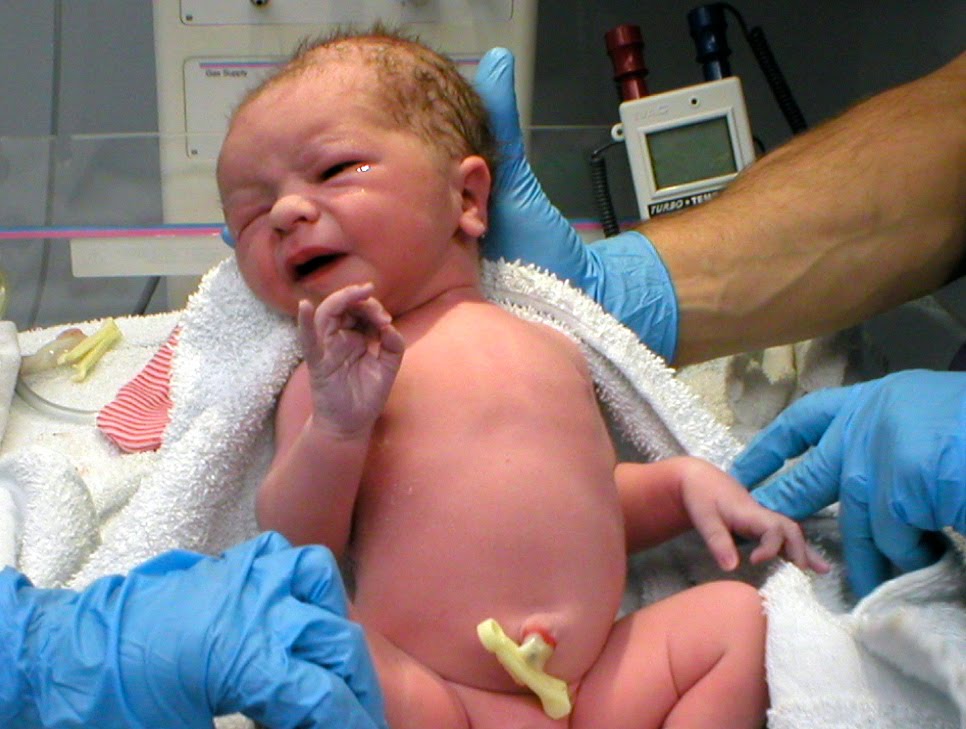
Another hour passed and Paul arrived.  I was in scrubs and sitting at Steph’s head.  The room was cool, and Steph was all bundled up (from where I sat), wrapped in sheets and blue towels, interestingly, looking a lot like Paul would just a few hours later after the nurses swaddled him.
The c-section was relatively fast after so many hours of labor.  Steph was a champion.  We exchanged small but important words, mostly exchanges of “I love you” and “how are you doing?”  She seemed very calm and I was nervous.  At one point she told me she felt like she couldn’t breath very well.  I glanced up at the monitor and anesthesiologist; things looked fine and he comforted her immediately by assuring her it was a common feeling due to the anesthesia, but that she was breathing fine and her oxygen levels were good.  Steph seemed OK and I had to trust him.  Very shortly after, our doctor said, “OK dad, I’m ready to deliver the baby, do you want to stand up and see?”  I winked at Steph and stood just in time to see my son enter the world.  His back was to me as the doctor gently and smoothly lifted him up with her hands under his arms.  Just a few seconds later and I heard his voice for the first time as he began to cry.  My heart leapt for joy and broke at the same time.  Nothing was wrong; everything was right and good.  And I had just witnessed the most amazing thing in my entire life:  the birth of my firstborn son; and my amazing wife who instantly became a hero in my eyes.
I’ve seen some amazing things through the 47 years of my life.  I’ve traveled to all but one continent on this earth, been to some of the wealthiest and poorest nations, worked as an EMT and firefighter, and served in combat along side my brothers and sisters in arms.  I have never seen anything that rivals what my wife did.  I didn’t do it; she did.  She bore my son, kept him safe, nourished him by God’s grace, then made herself completely vulnerable by placing herself at the mercy of everyone except herself as she lay helpless on her back on a table--entrusting herself entirely into the hands of people she really didn’t know.  And our son was born.

Like Alec Wilkinson wrote in the third essay in Fathers and Sons, I began to cry.  Just like him, I didn’t anticipate it.  In fact, I didn’t even think about my possible reaction to my son’s birth in advance.  Here’s what Alec said, “I did not expect to cry when my son was born--it seemed a silly and conventional and trivial thing to do, weep for joy, like a figure in an advertisement--but I did, quite suddenly and without warning, as if it were a reflex.”  I was blown away and I shed tears: not bawling, not even sobbing, but I quietly and lovingly wept in absolute awe of my wife.  Although it wasn’t the case before Paul was born, at that moment it became inconceivable to me that anyone can view human life as anything but miraculous: whether you’re a creationist, evolutionist, a noneoftheaboveist or a nothingatallist.  You get my point:  life is a miracle and my wife and son are the proof.  Ladies, you rock.  Moms, you’re something even more special.  You have facilitated miracles.
Men who are dads, if you don’t respect this about your wives, you should probably just turn in your man cards now, if you can find it.  If you think I’m right and can’t tell your wives what you think, or the other men in your lives, I fraternally encourage you to grow a pair or send your card to me and I’ll discretely dispose of it for you.  (We’ll never speak of this again.)  If you’re one of those other men and would presume to mock a fellow man who happens to be a dad and tells you something like this, turn your card in too, and use some form of express mail.  Finally, if you’re a single man or husband with no kids, I humbly ask you to just accept and respect what I’m telling you.  If and when your turn comes; let me know if you think I missed the mark on this.  By the way, unless you were born in a lab courtesy of a test tube, if you have the privilege of still having your dad around, consider finding the right time to ask him (or any other dad you respect) for his thoughts.  Be prepared to learn something (or to confiscate his man card).  I know you’ll do the right thing.
The first few nights after Paul was born were ordinary in one context, but extraordinary in another.  The extraordinary aspects I’m referring to are my own reactions to some very common things that happen with many an average newborn.  Nothing about the events of those next few short days and hours surprised me, but my reactions stunned me.  If you’re interested, please be patient and I’ll write more about this story soon.
It’s great to be a dad!

Saturday, July 3, 2010

Real Living: Love and Friendship

Friendship and love are interesting.  In a way, they’re pretty straight forward but at the same time, they’re complicated beyond measure.  On occasion they overlap, and I think that’s when we go from living to truly living.


We all have friends.  These are the people you trust and invest time, attention, and to a varying degree a part of yourself into.  Across the spectrum of friends there are good ones and best ones; not really a problem though since people have depth and are complicated.  There are folks we invest more into than others for a variety of reasons--shared interests, available time, distance, etc.  Then there are those special circumstances where it’s not clear if someone is your friend or not, but elements of the relationship look and feel like friendship--even a very strong friendship.  Let me give you an example.  I’m in the military and move with some regularity.  Every two or three years I uproot my entire immediate family and off we go to a new place.  One of the amazing things about this lifestyle though is that we share it with many others in the same circumstances, and when we get somewhere new, we have immediate friends.  They may not be good friends at the start, or even ever, but there are elements of the relationship that would shock the best of friends outside this context.  I can arrive at a new location and literally trust my neighbor with the keys to my house, my car, to sign for my household goods (all the stuff we own and fill a house with), and frankly my wife and son.  Amazing!  I think someone once referred to these as the common bonds that will tie folks together.  And so goes friendship.  Because I’ve moved my entire life I have only a few friends I’ve retained from my youth (up through high school).  Oddly, I have even fewer that I’ve stayed in contact with from college.  But I have quite a few from my adult life, all spent in the military, several of whom are truly like brothers and sisters to me.  Some may be closer.  But what’s most interesting is my wife--I’ve known  her since grade school and we ended up married.  We are best friends, and we’re lovers.
So then there are those we love.  Philosophers bicker about what it is (and isn’t), but for us regular folks, it’s like “good art”, you know love when you see it.  It doesn’t really matter what the “experts” say.  We all love lots of things and the word has a variety of meanings.  In this case though, I’m talking about when we’re fortunate enough to find someone who is the love of our lives.  I’ve seen this in others now and then; sadly it seems rare.  I feel fortunate that I’ve found it too.  As I said, I married my absolute best friend, the mother of my son, and she’s also the love of my life.
So what’s the point?  Well there’s living, and then there’s living.  Don’t get me wrong--I’m not diminishing any relationship that anyone has, with or without a husband or wife.  For me, I was living a great life before I married my wife.  She was the right person for me, and over the seventeen years of our marriage, I’ve realized that while life was good, while I was living before, once we were together, life took on a whole new significance, meaning and purpose.  And it was amplified when we had our son.  I am alive--really alive.  I’m middle aged, my body has been broken (literally), and even serves as host to at least one “tropical” critter (parasite) that decided I’d make a good home when I was in Africa (and I’ll probably never be rid of until I move on).  But that’s not life.  My body can fail.  Living is having friends and genuine friendships.  Living, is when you have the privilege of seeing one of those friendships develop in to love.  It might be marriage, it might be the genuine love between brothers or sisters, and frankly it could even be between folks who aren’t related in either of these ways.  I’m not actually sure what makes it happen, but it does.  Life is a wonderful thing; real life--genuine living--is when we have the privilege of wonderful friendships, at least one of which becomes the love shared through marriage, through the deep bonds of brothers or sisters, or the absolute closest of friends.  Because of the dear friends I have, and the special love of my wife, I am a better man than I could have ever been otherwise.

Monday, June 21, 2010

My Dad

My dad is one of my heroes.  This Father’s Day I want to honor him by explaining to a limited extend what he’s contributed to my being the man and father I am today.

Here’s his story:
Dad was born in Salt Lake City, Utah in 1937, the son of a salesman for what was the American Chicle Company.  One of his earliest memories was from when he was a little guy (probably only two or three years old).  The family lived on the third floor at the time and dad would often play in or near the window when he couldn’t be outside.  The window washers had come by but failed to put the screen back tightly.  When dad climbed up to play, he fell out the window.  His grandmother (called “Nan”) jumped out the same window after him and as Dad recalls, somehow she seemed to get to the ground before him or at nearly the same time in order to try to protect him from the fall.  Fortunately he fell into a clump of bushes below the window and wasn’t harmed.
In 1941 when he was about four, the family moved to Dallas, Texas where my grandfather was promoted from salesman to District Manager.  At that time, as the US entered World War 2, my grandfather volunteered for and was inducted into the Navy and attended Officers Candidate School.  Around that same time, my dad’s grandmother back in Salt Lake City was going blind.  As a result, the Navy sent my grandmother, dad and uncle back to Salt Lake to be with her.  The Navy paid for the travel and sent them on a troop train; that was my dad’s first exposure to the military, riding the train with the troops who were making their way to the war.  Shortly after arrival, it was clear Nan was completely blind.  At that time, my grandfather was the head of household and the sole provider for the family.  as a result, the Navy exempted him from service and the family (including Nan) moved back to Dallas.
When dad was first in grade school, his older brother Neil was supposed to walk him home.  Neil just walked home alone and left dad at the school.  Dad found his way home alone, even though he doesn’t remember how he found the house.  Neil took a beating.
As a boy and young man, dad always had chores to do.  One particular chore that still sticks vividly in his mind was mowing the grass.  My dad and uncle were both young, dad wasn’t tall enough to reach the lawn mower’s handle, but my uncle was.  As a result, my uncle Neil was allowed to push the mower.  There was also a rope tied to the mower that my dad used to walk in front of the mower, pulling it along like a plow horse.  When the grass didn’t need mowing, there were always other chores to do: painting the house, mending a fence, etc.  It was clear to my dad (as unenjoyable as it was when he was a child) that he was expected to put the family first and that everyone in the family was expected to contribute for the greater good.
His first real job was as a paper boy in Dallas when he was 9 years old.  As was normal for the day, he would go door-to-door to collect directly from the customers once a month.  From that money, he would pay for the newspapers, with his profit coming from any additional money or tips collected.  From what profit he made, my grandmother allowed him to keep $5 a month; the rest went into the house fund to cover other family needs.
The family moved from Dallas to Cleveland, Ohio in 1951 where my grandfather was promoted again, now to Division Manager.  This was early in the Korean War and dad has vivid memories of lots of radio chatter about our military and the war.  Cleveland became home for the rest of his youth and it was there that he completed 8th through 12th grades. 
When he was 13 years old he took an all-summer job washing dishes at the Centerville YMCA Camp in Ohio.  His first summer there he was still short enough that he had to stand on two Coke-a-Cola crates to be tall enough to wash the dishes.  His work ethic impressed his manager there and as a result, he was able to work other jobs too, including in the craft shop and eventually as a life guard, all under the oversight of the same manager.  His experiences at camp were good ones, it earned him some money, and it got him out of a full summer of chores at home.  He continued working for the next five summers, through graduation from High School.
As was typical of the time, since he didn’t have a car he hitchhiked to get to and from camp, even to return home in the middle of the summer when he had a few days off.  His last summer there, the summer after he graduated from HS, his brother Neil had joined the AF and dad wanted to have his brother’s Buick.  Grandpa wouldn’t give it to him and instead said he could have it if he bought it.  Dad paid $100 and bought his first car.  What was noteworthy about that final year Dad had accelerated through HS and completed school in February.  As a result, he worked for my grandfather from February until the summer.  That summer before college started, probably to avoid more chores around the house for no pay, he went back to the YMCA camp.
He graduated from John Marshall High School, having lettered in track all four years, and applied to attend Miami University of Ohio.  Miami was co-ed university and known for its business school.  It was a feeder school for Harvard’s Business School, and as such was the only state school in Ohio that required prospective students to take entrance exams.  Dad was accepted and also decided to enroll in ROTC.
As a freshman, he pledged for ΣAE and was accepted into the fraternity.  That year though, he and his group couldn’t be inducted because the fraternity was in trouble and on probation with the National Chapter.  Dad and about 30 other classmates decided to wait the probationary period out and join when they could.  (Other students apparently didn’t wait and went on to other fraternities.)
At that same time, his brother was studying to get into medical school and due to his circumstances, needed to pursue a masters degree first to prove himself.  As a result, most of the available money in the family went to pay for his college bills rather than my dad’s.  My grandfather paid for dad’s first year, but that was it.  Dad wanted to continue college and ended up working four jobs to pay his room, board and tuition: as a waiter in  one of the women’s dorms, as a burger cook and waiter at the fraternity house, and as a salesman at a local clothing store.  He finally worked his way through to graduation in June 1959, received a business degree and a commission in the US Air Force.  His dad congratulated him for working his way through college and asked him what he wanted.  Dad said he wanted a car, preferably a convertible.  Grandpa asked him if he’s like one of those new Impala convertibles, dad said yes.  Grandpa picked the car up and dad thanked him for such a nice gift.  Grandpa then told him it might not be such a good deal and to look in the glovebox.  In the glove box, dad found the payment book for the car.  It wasn’t intended, but dad had just bought his second car, thinking it was a graduation gift.
As I mentioned, dad was in ROTC all four years of college.  He wanted to join the AF to be a pilot, figuring he could serve his country for several years, then shift into the commercial aviation world as an airline pilot.  He took the exam to see if he qualified to compete for a pilot training slot and earned his private pilot’s license, at the time a requirement to gain a pilot training slot with the AF.  He scored well and with a private pilot’s license in hand was selected to attend pilot training after commissioning.

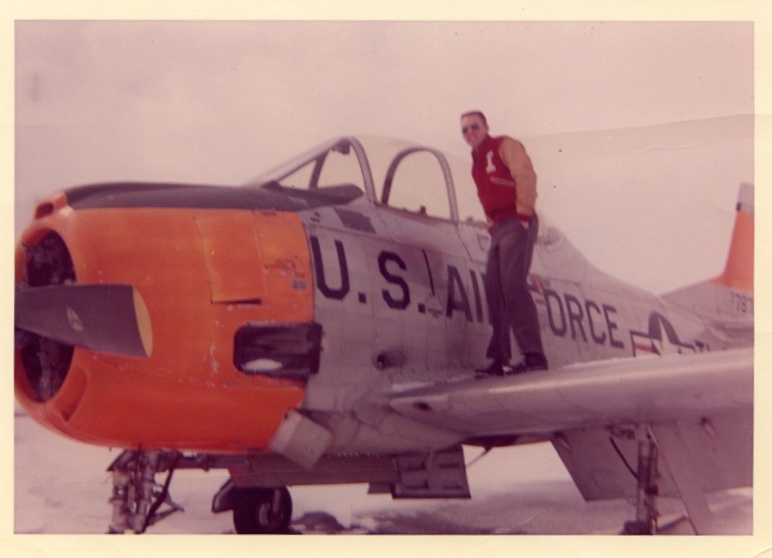
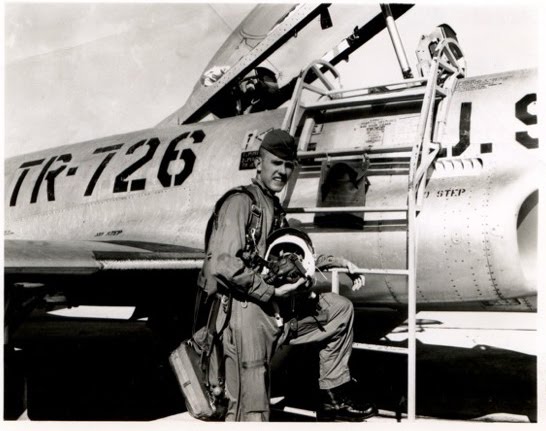
In December 1959 he reported to Lackland AFB for what was called officer preflight training.  After successfully completing preflight, he continued to Malden AB (Malden, MO) for primary flight training where he flew the T-28 and was in the last class to fly this reciprocating engine aircraft for primary (pictured above), then at Laredo AFB, TX where he flew the T-33 to complete pilot training in a jet aircraft (pictured below).  After graduation and with survival and passing through the Technical Training Unit, he began flying C-133’s as an airlift pilot.  Throughout his career he flew C-130s, C-141s and C-5s as well as other assorted aircraft.

During the early part of his career, he was also selected along with 125 pilots from across the AF to screen for the astronaut program.  He passed the grueling 9 day physical, but ultimately wasn’t selected to complete the training since he didn’t have an engineering degree.  His name was kept on the books as eligible, but he was never called upon to enter the program.
He served in combat in Viet Nam, commanded at the squadron, group, wing and twice at the air division level, and also served as the Technical Training Center Commander at Keesler AFB, where he retired in 1991.  One of the Air Divisions he commanded, the 76th Military Airlift Division at Andrews AFB, MD, included three subordinate wings, one of which was the 89th Military Airlift Wing responsible for presidential and congressional airlift, including the US’s most famous jet: Air Force 1.
His original plan to move to the airlines after a few short years flying for the military was overcome by his love for military aviation and those few short years became a 32 year career.  Along the way, while working a full-time career in the Air Force, he also earned an MBA on his own time.  He retired from active duty as a major general and transitioned to civilian life.
Shortly after retirement, he was hired to tech MBA studies at William Carey College in Hattiesburg, MS.  Around that same time he also ran for Congress against the incumbent for the 5th Congressional District in Mississippi.  The incumbent won but the visibility and desire to continue in public service was noted.  As a result the State of Mississippi asked him to become the first executive director of the newly formed Mississippi Gaming Commission in September 1993--the year the State Senate voted to legalize and regulate casino-style gaming in the state.  He accepted and ran the State’s gaming compliance arm for almost six years until sometime in 1998.
Shortly afterwards, he was offered the position of President and CEO of a financially struggling Signature Works (the largest company in the world employing visually impaired workers).  He served with them for two years, moved the company back into the black, then handed a healthy company to new leadership.  Never content to sit still, he then started a company with two other men to store cars for military members stationed overseas or deployed.  That same year he also started his own company, PDH Associates, to assist individuals and companies who desire to enter into the gaming industry.  Since then he’s taken a number of corporate governance positions within the gaming industry, including a position on the Board of Directors for the Riviera in 2001, and as the President and CEO of Pearl River Resorts, working directly for the Meko (Chief) of the Mississippi Band of Choctaw Indians.  He still lives in Mississippi today and actively continues with his own company, as well as with Pearl River Resorts and the Riviera.

Dad, I want you and others to know what you taught me: the things I can say you’re responsible for teaching me and that have made me the man, and the father that I am.
  • Serving others and your country is more important than serving yourself
  • Work hard and provide for your family
  • Be a team player but don’t expect others to carry your load
  • Be generous with what you have and help others when you can
  • Education is important--get as much as you can
  • Discipline will get you through most everything in life
  • Priorities matter--commit to and finish what you start
  • Have a sense of humor--don’t lose it and don’t forget to laugh
  • Don’t forget where you came from--it matters because it makes you who you are
There are so many more things I could say, but these are the big ones.  You didn’t just tell me these things, you taught me through your words and deeds across my entire life.  You also commissioned me as a second lieutenant in the US Air Force, officiated all of my promotions, greeted me when I returned from my first combat deployment, and my son is named after you.  Thank you for being my dad and my hero.  If I’m ever even half the man that you are, I can count my life a success.  Happy Father’s Day, dad.  It’s truly great to be your son, and as always,
It’s great to be a dad!

Saturday, June 19, 2010

Father's Day Guest Post: For Dad

This post was submitted by Kristina, a military officer and colleague of mine, in honor of her dad.  He recently passed away.  She penned these words on September 24th, 2009 and shared them at his funeral.  It seems appropriate to post her words, unedited, for Fathers Day.  Read on as she honors her dad:

I just wanted to start off by saying that Dad asked me to do this a couple of weeks ago. I knew it would be hard, but how could I say no? Dad also asked me to talk about what he meant as a naval officer. Unfortunately, I didn’t really know him when he was a naval officer, so I’d like to defer to (my Dad’s friend), who’ll be following me.
I don’t think Dad would have asked me to do this ten years ago. When I was about 16/17, we weren’t exactly on speaking terms. Before and after that rough patch, however, is a different story. I remember he was an assistant softball coach on Melissa’s and my team; he was an enthusiastic homework tutor, a motivator, and a supreme public embarrasser; in fact, when we went food shopping, he loved to dance in the middle of the supermarket just to see me turn multiple shades of red and hear me squeal, “Da-ad! You’re embarrassing me!”
Melissa, my sister, was a Daddy’s girl. Once, when Melissa was three years old, Dad was shoveling snow outside. Melissa put on Dad’s Navy uniform jacket and cover (aka his hat), walked outside to the front stoop, and exclaimed, “Daddy! I’m just like you! I’m in the Navy, too!” Laughing, Dad swooped Melissa up, and Mom took pictures.
I know Melissa will agree that we enjoyed being world travelers together. We lived in and traveled all over Europe and the US. Dad loved to show us great sites and teach us the way things worked – the cable cars in the Swiss Alps, for example.
Dad and I would have long conversations. I could always count on Dad for deep conversations on religion, science, and the meaning of life, among other topics. We concluded that there must indeed be life on other planets, and that Moses really did part the Red Sea. In fact, our last real conversation was on death as a journey, which I’ll get into later.
Last month, I wrote a prayer for my family in my journal, and read it to Dad when he was in the hospital. He loved it. I thought I would share it:
Written Aug 20, 2009:
"My dad has Stage 4 cancer. He hasn’t had a job in over two years…
[I also spelled out a few details about my other family members]
Please, God, help my family. Don’t worry about me – I’m fine – I’m doing great actually. Please cure my dad’s cancer. I know he’s been a smoker for 34 years, and he shouldn’t have done that – but could you spare him anyway? [More about other family members]
God, I know this is an extremely tall order, and I know I’ve said this before, but if you grant me these things, I’ll never ask for anything again – I mean it this time…
I’ve never written down a prayer before."
Dad was crying after I read him this prayer on the phone. And it’s kind of funny, in the weeks after that prayer, I found myself sometimes slipping and asking God for something, and immediately afterwards I would say, “Just kidding, God! I take it back! I’m not asking for anything else like I promised I wouldn’t!”
I read parts of the Bible several times during his last weeks with us. His favorites were Psalm 23 and Corinthians. My favorite is Corinthians. I also prayed with him. He really liked that.
I also thought I would talk about my last real conversation with Dad; it was on the 15th of Sep. Dad was in good spirits, eating some of the dark Swiss chocolate I had gotten him. Dad started saying he wasn’t sure what death was going to be like. I asked him, “Are you afraid?” 
“No, I’m not afraid” he said. “I just don’t know what to expect…I’m curious.” He said that he felt like he would get to heaven and then ask, “Now what?” He said that all of his faiths led him to believe in an afterlife. I told him a story where a friend of mine had seen his grandfather attend his own funeral. “Oh yeah?” Dad asked – I think he liked hearing that.
I finally gave him the book on death that the hospice nurse had given me a few days before. (I had been hiding it from him.) The name of the booklet was “Gone From My Sight.”
“What a bad title for a book!” Dad joked, “Although, I guess there aren’t too many other names you could give it anyway.” We looked up the names of other similar books in the back of “Gone From My Sight” and we laughed about those too.
I also pointed out something else I had noticed about the booklet, “Well, the book says that your pulse will raise to [so many] beats per minute…or it says, it might lower…well, which one is it? Will it raise or lower?? That’s some CYA if you ask me!!” For those of you that don’t know what CYA means, it stands for Cover Your Ass. Dad heartily agreed with me and we laughed pretty loud about it.
I also showed him the part where the booklet says that a lot of sleeping takes place weeks beforehand, but actually, “very important work” is being done by that individual who is sleeping. I got real serious, furrowed my eyebrows, and sternly asked, “Dad, are you doing important work while you’re sleeping?” 
“No” he replied, and we burst into laughter again.
I also pointed out in the booklet where it said that individuals sometimes see loved ones who have already passed on. I asked Dad if he had seen any loved ones. He said no. We sort of shrugged together.
This “Gone From My Sight” booklet was only a flimsy 14 pages stapled together. Dad was looking in the back, where it had a price listing. He was telling me about the prices. I think the cost was $2.00 per copy, unless you wanted to buy more than 2000 copies or something like that. Then Dad joked that “you could get a deal at $1.40 a copy” or something like that. “Oh yeah, that’s real savings” Dad chuckled. “And who’s making these books anyway??” he asked. “So when you order some, it’s like they tell Grandma in the basement…’Yo Grandma! We need more copies!!’” And we were back into hysteria again. Theresa (Dad's wife) even walked into the room because we had been laughing so much.
The book also said that sometimes individuals have a last energy surge before they pass on. Dad and Theresa both said that they thought that that would be the case with Dad, that he would have a really great day… As they were talking, I couldn’t help but wonder if this was Dad’s last surge, but I dared not say anything.
Dad told us he felt as though there was so much left he wanted to do. I asked him if he could write it all in a list (and maybe I could finish them for him), but he said he didn’t think he could write out a list. Theresa told me he had said he wanted to go to Guardian Angel training. I think that’s where he might be now.

The very last conversation I had with Dad – the day before he died, his words weren’t very clear, but I could tell what he was saying most of the time. I told him I loved him, and he told me he loved me. I asked him if he was in pain. He said no. I asked him if he was okay. He said “Yeah....really…truth.” I also prayed with him. I said an Our Father and a Hail Mary, and read Psalm 23 to him, as I had done a few times before – he liked that too. Mom had told me that Dad needed permission from Melissa and me to move on. I told him it was okay for him to sleep forever, and that if he saw a bright light to go after it. Dad also responded to me later that day – as I was leaving for the night, I kissed him on the cheek and told him I loved him. His eyes opened immediately. I told him I loved him again. He said “I love you.” Even though it wasn’t very clear, again, I knew exactly what he was saying.
He also responded with smiles when his pastor came and prayed with him, and when his siblings called him and we held the phone up to his ear.
The night Dad died, I was writing in my journal. I was jotting down as much of our last conversations as I could remember, and I had written another prayer for him. I thought I would share it:
Written Sep 21 2009:
Lord, I pray Dad has a painless and speedy transition into heaven, and that he becomes a Guardian Angel like he said he wants to become. Of course, my first choice is that Dad be cured and wake up just fine. My second choice is to put my Dad’s soul at rest and to end his suffering.
Now, Dad liked big parties, fancy dinners, and flying first class. He asked me to toast him. Dad would want us to make a big deal out of this, in a good way. So let’s make a big deal out of it. I think a lot of “I remember when’s” followed by laughter are in order. God be with you all.

Sunday, June 13, 2010

Has Disney World Changed?

Recently my wife Stephanie was able to take our son Paul to Disney World for his third birthday.  It was a grand time with her parents and aunt there too.  Expenses were reduced since Steph’s family lives just an hour away from the park and with a four-day pass, my son was able to enjoy Disney saturation.  Although I wasn’t able to make the trip, I enjoyed a stream of photos Steph sent back to me as well as a good bit of video from the trip once the trip was over.  I hated to miss the trip and after seeing the pictures and video, I wished even more I could have been there.


Aside from wishing I could have gone, seeing the video was interesting to me for a number of reasons.  Since long before our son was born, we had heard from a number of friends how Disney World had really changed from when we were kids: how it had become too commercial.  The videos were my first glimpse into that world since my own childhood, or at least an unfiltered view that wasn’t presented to me through the media to accompany marketing or a story (with an agenda) of some sort.  The video Steph brought home was about Paul, not Disney World.

Based on the small volume of memory I have about my own childhood experience at Disney World, the park seemed to be less of a fantasy or dream world, and more of an amusement park.  I don’t know that it appeared any more or less commercial though, just bigger.  Watching Paul, it was absolutely a magic kingdom for him--the Magic Kingdom--and nothing less.  He didn’t see actors in suits, he saw Mickey Mouse, Woody, Buzz Lightyear, and any number of other characters who were very real.  Steph and Paul went to the park several times and each time for my son was just as exciting as the first, seeing many of the same, and several new characters each visit.  His birthday is now weeks behind us, we’re all back together again in Germany, and we know without a doubt Paul’s experience remains fresh; we know he even dreams about his time at Disney World and wakes up telling us stories and asking questions about where various characters are or what they’re doing today.

So is Disney, or specifically Disney World, more commercial?  Probably.  The machine that is The Walt Disney Company seems to be much bigger now than ever.  Or more valuable in terms of its financial worth.  I don’t have numbers to back this; it’s my perception.  The scale/scope of the company and all it does just seems huge compared to what it’s been through past decades--theme parks globally, movie/film interests, comic/graphic novel interests, gobs of merchandise, etc.  But I have to ask, so what?

Watching my son, and living a bit of my own youth through his eyes so many years later, I’m not convinced that anything has really changed from the perspective of a child.  He saw nothing commercial; he was in a real, living dream.  When he watches some of Disney’s movies, he sees other glimpses of a magic world and isn’t concerned or distracted by the things that aren’t in the realm of the possible.  It’s all about his young, fresh and very active imagination.  Anything is possible!

I’ve learned that whatever I think of Walt Disney Company today, what I see is through my adult eyes.  My son, with a full three years under his belt, doesn’t see the machine behind the magic in the Kingdom.  His experience now was mine so many decades ago.  If I find I do or don’t like the way Disney conducts the business behind the magic, that’s for me to deal with.  But I am convinced when the fruit of Disney’s efforts bubble up in the world of kids today, at least at Disney World in Florida, they can proudly declare success.  Disney has preserved a world where kids can come and get lost in the magic, with none of the worries or distractions that too often burden us as dads; they don’t see the machine behind the magic.  As a result of not being able to go this time and how much shear fun my Paul had, Stephanie and I are planning to take him back next year for his fourth birthday.  It’ll be a long, expensive, and somewhat complicated trip for us, but that’s how it goes--we’re the adults.  For my son though, it’s simply a return to the Magic Kingdom.  I can’t wait!

It’s great to be a Dad!

The Art of Parenting

It’s abundantly clear to me that raising kids is an art: not doodling, but full-on Rembrandt stuff.  I think I knew this even when I was a kid, but I didn’t really have enough time on earth to have a reasonable understanding of the real context or weight of what it meant.  As parents Steph and I constantly work to stay somewhere between the extremes of being overprotective of Paul and surrendering control over what goes into his young mind.

My view of Paul’s education is that Steph and I are primarily responsible.  By education, I mean the entirety of his learning, not just the formal education that takes place in a school or church.  Schools and the church will eventually do the bulk of the formalized heavy lifting, but as his parents we will always have prime responsibility for everything that forms our young son into a young man and eventually into a mature adult--inside and outside the classroom.
Our goal in raising Paul is to prepare him to be a healthy, contributing adult member of society.  I’ve watched other parents raise their kids my entire life (starting with watching my own parents raise my sisters and I) and found that as with almost everything there’s a significantly wide road where the issues aren’t really about right or wrong.  They’re in an acceptable lane defined by right and wrong where the differences are really about what’s best or appropriate for a particular child at a given time.  But the extremes are lurking just off the middle of the road and we’ve seen any number of our friends and acquaintances drive with high-speed zeal right off the road, across the shoulder and into the ditch on one side or the other.
The ditch on the right is overprotection.  These parents are control freaks for any number of reasons: trying to live (or relive) their lives through their kids, they’re afraid of the world, or they can’t stand to let their kids be kids and instead expect a child or young adult act with the same wisdom that the parents have.  These are the ones I believe fail in the previously mentioned primary goal or purpose of parenting. They have not raised a child to be strong and educated, and fully prepared to confidently enter society knowing who he or she is.  Instead, they’ve worked to prevent it as if they could keep their little one little. 
Then, the ditch on the left is letting somebody, anybody else worry about it.  You’ve heard these people at the grocery store or in line at Starbucks defensively asserting they don’t have time, or they’re not the trained professional: the school teacher, the pastor, the daycare worker.  And they’re right, but all those other folks aren’t the parents either.  I think the folks who fling themselves into this ditch are lazy or chronically over-tired parents, the ones who over time seem to constantly have a list of reasons for letting everyone else raise their kids--the schools, the church, daycare, the computer or TV, the neighbor.
Whether they intended it or not, with our generation when someone goes in the ditch, it’s mostly been overprotection and a failure to prepare their kids to live in the world.  Instead they try to protect or shelter their kids from ever entering it, as if it were possible.  From what we’ve seen, the result is usually an unprepared and socially impaired or naive young adult, and very frustrated parents. This is unfair to the child and to society, and when that young adult actually does make full contact with the real world, the young adult either shuts down or rebels, and the rest of us get to enjoy their dysfunction or sophomoric anger as they discover they have a lot of catching up to do.  Sadly and most often, these families are well-intentioned members of the church.
Steph and I feel fortunate to have grown up with both parents around.  We both enjoyed the benefits of traditional families in that our dads worked full time and our moms stayed home.  And trust me, they were all busy beyond my ability to put in words.
Having Paul later in our adult lives certainly has its benefits.  In this case, we’ve hopefully learned a lot from years of watching good and bad parents.  The downside is that we know enough that raising our own son may be scarier than it ought to be.  Will we mess up?  For sure.  Hopefully we’ll be wise enough to generally get it right though, thanks to the parents we’ve had the privilege to watch perform the art of parenting.  And I hope we’re always transparent enough that we’re also good examples for those who come behind us.  God help me--this parenting is hard work, but it sure is fun!
It’s great to be a dad!