Showing posts with label loss. Show all posts

Saturday, April 18, 2020

Learning About Love and Loss

In the past few years, there have been several things that fueled the balanced development of my son’s emotions.  We do our best to encourage disciplined thought, but not detachment from the joys and pain that come with living.  I suppose as parents we don’t really know how we’re doing until our kids have matured and we see how they deal with various situations in life.  In Paul’s case, there have been events that highlight to me how he’s developing a strong emotional balance, and a kind heart.  First a real-world event, then I’ll share his reaction to scenes from two movies.
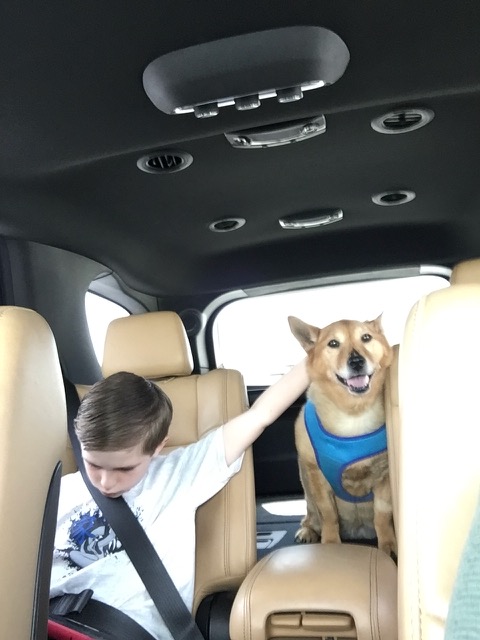

Until we bought the two Corgis we currently own, every dog Steph and I have had in the years we’ve been married have been rescues.  Jazz was an odd mutt with a strong personality.  She was never mean to Paul, but she never really liked him.  We’re not completely sure why, because she was also legitimately protective of him if she felt someone or something was a threat.  Overall, she preferred for him to just leave her alone.  We rescued Jazz from a vet, where she was abandoned along with several other puppies from the same litter.  As Paul got older, it troubled him that Jazz didn’t really care for his company.  He did his best not to irritate her, and was fantastic at accepting it was best that he just pet her when she’d tolerate it.  She had no patience at all when he’d try to snuggle her.  As she got older, she got grumpier.  Late in life she contracted cancer and finally the time came that we needed to end her suffering.  We set the appointment with the vet, leaving time to allow Paul to say goodbye to her at home.  While we gave him the option to come along, it didn’t surprise us he preferred not to.  The time came for him to say goodbye, and our hearts were warmed that she let him sit down on the floor with her, give her very warm, big and gentle hugs—he all but held her in his arms—and then he spoke quietly and calmly to her.  His words broke our hearts.  Tears quietly ran down his cheeks and after several kisses and hugs, he whispered:  “Dream of me, and walk with me in your dreams.”  Steph and I were wrecked at his poise and maturity, and the love he continued to show a dog that didn’t really love him.  He sent her off well, and we couldn’t have been prouder of him.


In 2012 we took Paul to see the movie “Rise of the Guardians”.  We’re not sure, but we think he still believed in most of the magical “guardians” that surround childhood—Santa, the Tooth Fairy, the Easter Bunny, etc.  This movie was about the spirit behind these stories, and put a cool perspective on what kids can learn from them, by gently reenforcing that what they represent continues on with those who believe.  Meanwhile, those who quit believing may very well also lose an appreciation for what the actual point was—caring, giving, etc.  At the time Paul saw the movie, he was having periodic nightmares.  As kids do, he would wake up afraid, then need to seek out Stephanie and I to quiet his nerves and remind him the nightmares aren’t real.  A big part of the storyline of the movie revolved around the rational and confident defeat of nightmares.  This spoke loudly to Paul and convinced him he needed to continue to believe in the positive aspects of these characters, and to purpose not to fear the bad dreams that come from uncertainty and an active imagination.

At the end of the move, we asked him what he thought.  Paul said, “Some tears were shed because now I know they (the Guardians) will always be in my heart.”  There were a few tears during the movie, and he was right on the edge of tears when he said that. The message of the movie had a real impact on him and I think it surprised him how empowered he felt to know he is in control.  It was all him. He told us a little later they were happy tears because he knew that as long as he believes, the Guardians will always be in his heart. 


Then just recently we let Paul watch the western Tombstone with us.  He quickly got into the characters, the point of the story, and the action (of course).  Late in the movie, Doc Holliday is at the end of his life.  Laying in the sanitarium in Colorado, he’s dying, and the scene comes when he orders Wyatt Earp to go away.  Wyatt respects his friend’s wishes and as Doc lays there alone, the camera angle lets you look from the end of the bed, past his feet to his face.  Doc quietly says “I’ll be damned; this is funny.”  What isn’t explicitly stated is that he’s lost feeling in his feet as a sign of his imminent death.  While it’s clear to any adult watching that he dies, they don’t really emphasize this.  Paul knew what happened, and was weeping for this antihero, as he appreciated the gravity of the scene.  He also grasped this was the end of the relationship of respect and deep friendship between these two men—the same as the loss of a family member as the story is told.

In the end, we’re so proud of the balance Paul is developing across all things in his life.  As all parents do, we constantly assess where he is with all facets of life, and balance between sheltering him and overexposing him to things.  We seek to find and stay on that line where we’re doing our best to develop him into a young man of reason, who isn’t afraid of his emotions, but isn’t driven by them alone.  These little instances, in this case related to love and loss, give us little hints we might be succeeding.

It’s great to be a dad!

Wednesday, January 22, 2014

Realizing Your Mortality

Readers:  this post covers a heavier issue than usual.  I hope it’s useful to you now or at some point regarding how you may address the issue of mortality with your kid(s) or young people that you might have the opportunity to mentor.  

Early this month my son woke up crying in the middle of the night.  When Steph and I went to his room, he said he dreamt he was “buried in the ground under dirt before it was his time to die.”  He went on to say through his tears, “I don’t want to grow up and die.”  It’s important here to point out this wasn’t a horror movie kind of dream.  He wasn’t buried alive or anything like that.  He said he saw himself as if he was buried after he had died and clearly knew what had happened.


My son turns seven in February.  When I was a child, not much older than he is now, I also became aware of my own mortality.  I can’t recall anything in particular that could have triggered this realization, but I remember there were two related things that struck me heavily at that point in my young life.

First, I realized I was growing older, and as that continued, I would lose interest in the things that I liked to play with and do as a child.  It was obvious to me because I never saw any adults (my parents included) playing with anything I liked to play with or frankly doing anything I thought was fun at that young age.  That made me sad because from my young perspective I had some cool stuff and did some pretty fun things!  Everything about life was an adventure and I never wanted it to end.  But I could see movement toward a time when I wouldn’t enjoy these things.

I think the second revelation was a result of the first. I realized someday I would grow old enough that life as I understood it would end:  I would die.  I think it’s important to say I don’t remember knowing anyone who had died, or even being aware of anyone actually dying, but the simple logic of my young mind allowed me to put the pieces together.  This had a real impact on my life for several years to follow, as I wrestled with what it all meant.  Honestly, outwardly I was a regular kid, but inside I was distracted by my own mortality.

I don’t talk about it often in this blog, but it’s not something I hide either: I’m a Christian and as a result, I hold to the hope hope that when life in this body ends, I don’t simply cease to exist.  I wasn’t brought up this way though, nor did I experience anything akin to a conversion at that young age when I wrestled with the concept of death.  I mention this because as a child in what was practically an unchurched family, my parents didn’t have anything to offer me in the form of an explanation or context—not from a Christian point of view, or any other.  Life was just life.  Apparently you live, and then you die.  End of story.  

I remember at the point the frailty of life gelled in my mind, I was sick with a cold—a cold and nothing more.  But I was sick and as a result, a bit miserable.  In the middle of the night (like my son), and not directly related to being sick, I became aware enough of mortality that I sought the comfort of my parents.  I went into their room and as they comforted me I expressed to them my realization that I would die someday.  Looking back it was a bit of a funny moment, but when I told my mom I knew I was going to die and that it was disturbing me, she responded in an attempt to comfort me by saying, “you’re okay, you’re not going to die, you only have a cold.”  She didn’t understand that I wasn’t talking about having a cold, nor was I worried I’d die from it.  I can’t be critical.  What parent comforting a young child with a cold would ever think the issue at hand was actually the realization that death is a part of life.  I didn’t try to explain my struggle any further, they ultimately calmed me down, and sleep visited me again thanks to a soft back rub and the tiredness associated with the middle of the night.

Thoughts of the reality of my own mortality burdened me though for several years to follow, stealing some of the enjoyment from many of the things that were a part of my life.  It was a nagging preoccupation.  That brings me back to my son.  I remember struggling with the same thing and have worked to encourage his concerns by offering hope that there’s more to life than just life in the bodies he sees.

My son’s struggle with this issue does differ from mine in an important way :  he’s definitely aware of two deaths.  I blogged about losing my dad in August 2012.  My son was old enough to be very aware of what was happening as we visited my dad when he passed away, then during the memorial service in the days to follow, and finally when we interred him at Arlington National Cemetery a few months later in December.  Much less significant, but every bit as much real, we had to put our cat down just before we traveled to Arlington.  My son loved the cat and I’m sure he’ll always consider him his first pet.  

Although these things happened over a year ago, Paul has continued to talk about it regularly.  Not in a bad way, but it’s clear he’s continued to wrestle with mortality, and it seemed to come together in some way when he had his dream.  Since then I’ve worked to encourage him based on my own beliefs, and he seems to be handling it well.  One of the recurring discussions we have when he makes me aware he’s thinking about these things is that while we believe life goes on after our bodies die, it’s okay to be sad when we lose someone here.  It’s okay that we’re sad because we can’t see them like we used to any longer.  It’s also okay that we remember those we love who have preceded us in death.  And as a Christian, we can take comfort in the hope we’ll see our loved ones and friends again some day.  For those reading this who hold an orthodox or reformed Christian view, I’m sure you’re wondering how I’m dealing with the teaching that in death, everyone doesn’t go to Heaven.  I’m doing my best to be careful not to say (or imply) that everyone goes, but I’m also being careful not to lead my son down the path where I shatter any hope.  He’s not ready to have that larger and much more heady discussion just yet.  For now and for him:  all the hope I can offer a child with the stage set for the deeper discussion later.

We often hear the word “closure” associated with the passing of a loved one.  A year later, with all the understanding I can muster after losing dad, I think I’m mostly there.  Not completely, but mostly.  A way I describe where I am in the healing process: the open wound is closed and a scar is forming, but it’s still very tender.  Some days I think my son is farther along than I am; other days I’m convinced he’s not.  I do my best to understand all of this from his young perspective, not to make too much or too little of it all, keep it in perspective, and just be his loving (and living) dad.  My own childhood struggle with the matter of mortality certainly helps me with this.  I know this though:  it’s a privilege to be my son’s dad, and to be by his side as he continues to wrestle with it all.  There aren’t words to explain how special it is to be the man he turns to for explanation and comfort, to share what he’s thinking, and to cry and laugh with about anything and everything.  I get to watch him grow!


It’s great to be a dad!

Tuesday, August 28, 2012

Losing Dad


This may be the most difficult thing I’ve ever written.  Just a few weeks ago my son surprised my wife and I when he suddenly looked sad and said, “Dad, when I’m big like you and I have a son like you do, I’m going to miss you.”  I asked him, “Why will you miss me?”  He explained that when he’s big I’ll “be in my skel” and he won’t be able to see me anymore.  When he says something is a skel, he’s referring to it being a skeleton--being dead.  My young son was now somehow aware of death and the loss it brings.


On the 18th of August my wife, son and I boarded a plane in some haste and flew to Madison, Mississippi to be with my dad.  His was in the hospital and his health was failing quickly.  We were all able to see him.  I spent all day on the 19th sitting and talking with him, and to the best of my ability, comforting him as he was in and out of sleep.  Just a few days later, he passed away.  My mom and I were with him and it was the most heartbreaking and tender of moments.  We had both shared our thoughts and words of encouragement with him, ensuring he knew we were there and okay, and that we loved him.  Mom was sitting by his side holding his hand and I was standing over him from the other side.  I had just finished quietly speaking into his ear, I kissed his forehead, and he left us.  His departure was quiet and graceful.  It was honorable and dignified.

What made that moment most special to me as his son were those final words I shared with him.  They weren’t private or new to his ears, and were words I’ve said to him and to others about him before.  I quietly and humbly told my father this:

“Dad, I’m proud of you and all that you’ve done in life.  I’m so proud that you’re my dad and I’m your son.  I love you.”

Just seconds after I said these words, he died with my hand on his shoulder and his hand in mom’s.

As we made the trip to Mississippi, we told our son his grandpa (who he called “G”) was very sick.  Once we were there, I took time on several occasions to help him understand that he wouldn’t get to see G again, including one brief but significant father and son walk.  Steph and I didn’t want to hide this from him, nor did we want to make death some sort of fiction, and we struggled with how to best do this, knowing there isn’t a “right way.”  We were confident that our son was mature enough to see his grandfather as sick as he was, to grasp the basic truth of the reality of death (especially after his earlier statement), and to learn that the death of the body is as much a part of life as birth and everything in between.  He was with us during the visitation and memorial service, handled everything very well, and touched our hearts dearly when he solemnly snuggled Steph and told her sadly, “I’m going to miss G.”

As a son having just lost his dad, I was able to draw very real strength from having my son with me through it all.  It was special that we could share it, with me carrying the heaviest emotional weight of the loss for him, and as a dad experiencing the very real love and tangible support from my own son.  I also had the privilege of giving the eulogy at dad’s memorial service--truly the hardest thing I have ever had to do.  I can’t imagine anyone else having done it and while it felt like I was speaking without any oxygen in the air, it was also medicine for my own soul.  In the end, during the trip my son was able to see his grandfather purposefully for a last time, see the sorrow in my heart at the loss of my father, and hear the words I offered in a meager attempt to honor him--his grandfather--in front of his gathered friends and family.

We will bury dad at Arlington National Cemetery sometime later this year, and we will be there with him--father and son--to give dad one final goodbye as our country lays him to rest with full military honors.  I know I’m biased, but I think it’s the best thing my grateful family can do for this amazing and quiet man who gave everything he had to us, to his country, and to his community.  He served us all well, with honor, integrity and humility, and it showed to anyone who looked.  I certainly learned from his example and trust my son has too.  Among everything else, my job now as a father is to do my best to ensure my son continues to learn the same lessons of honor, integrity, humility and service, hopefully through my words and deeds.  It’s not easy, but what an awesome task.  And there’s no better way I can think of to continue to honor my father than by raising my son--his grandson--well.

It’s great to be a dad!

-------------------------------------------

Here are the links to my father's official military biography and his obituary.  His obituary captures his career after his retirement from the military.